How Does Polycarbonate Fail?
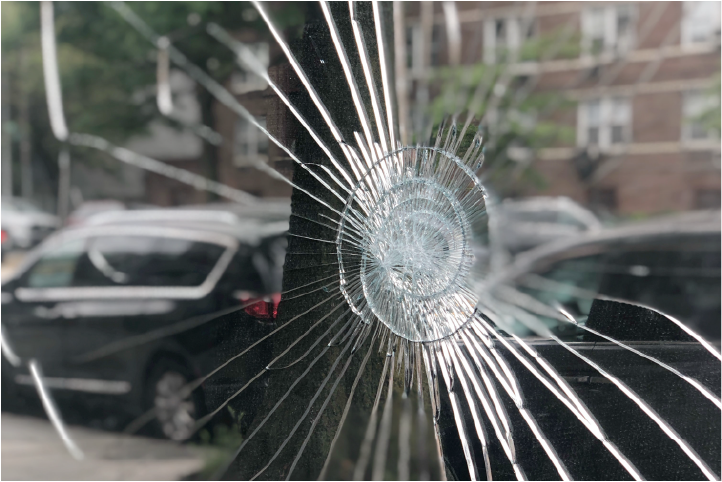
EXPOSURE TO CHEMICALS Polycarbonate (PC) is an amorphous (non-crystalline) plastic. PC is nicknamed “bullet-proof glass” because of its...
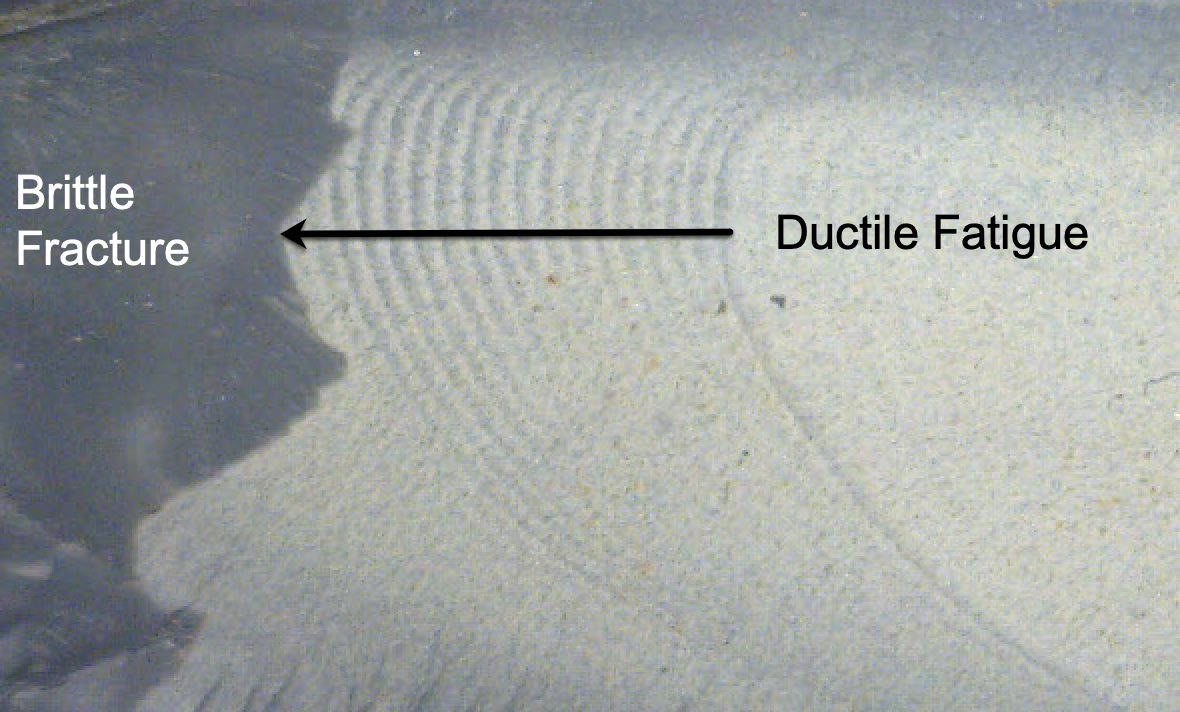
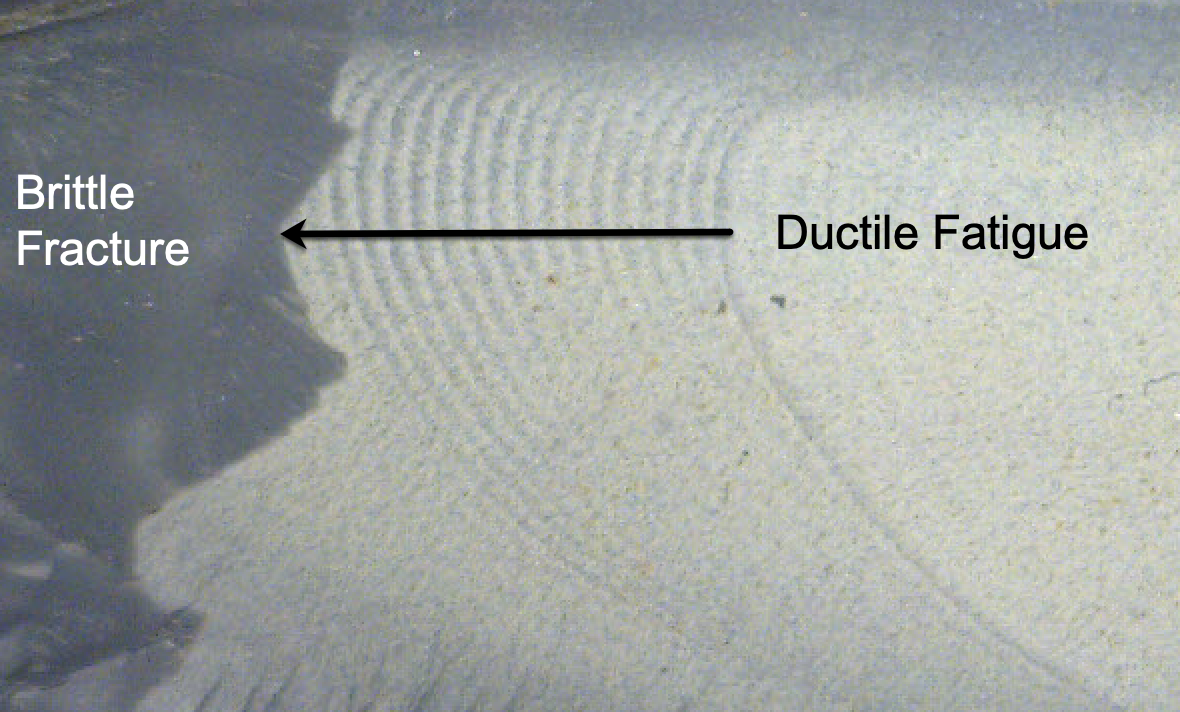
The plastic in rigid thermoplastic parts consists of long chain molecules entangled together like spaghetti noodles in a bowl of spaghetti. The strength of the plastic is directly proportional to the extent to which the polymer chains are entangled with each other. When a plastic part is placed under stress, the part is held together because of the chain entanglements. Every time the part is placed under stress, the polymer chains disentangle slightly. After thousands of stress events, the polymer chains become disentangled enough on the surface of the part that a crack develops. Repeated cyclical stress events causes the crack to propagate deeper into the part until the crack works its way completely through the part and the part completely fractures. This failure mode is generally characterized by the appearance of hundreds of parallel striations on the fracture surface when viewing the surface using a microscope as shown below:
EXPOSURE TO CHEMICALS Polycarbonate (PC) is an amorphous (non-crystalline) plastic. PC is nicknamed “bullet-proof glass” because of its...
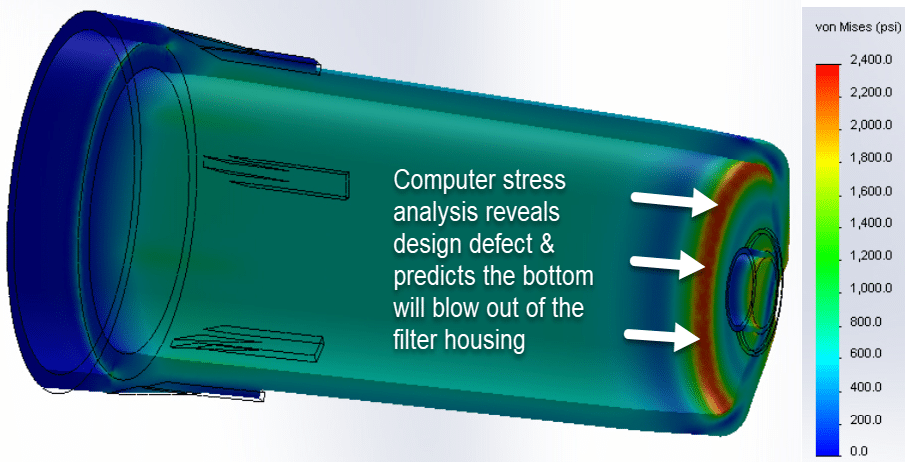
Water filters are pressurized containers that are molded using plastic. Pressure surges inside of water filters, caused by valves suddenly...
1 min read
How should you choose the right plastic for your part? There are literally hundreds of different commercial plastics and thousands of plastic...