Testing & Analysis
Plastic Failure and Cleaning Products
By Dr. Duane Priddy Sr. · Published February 14, 2021
FORENSIC EVIDENCE
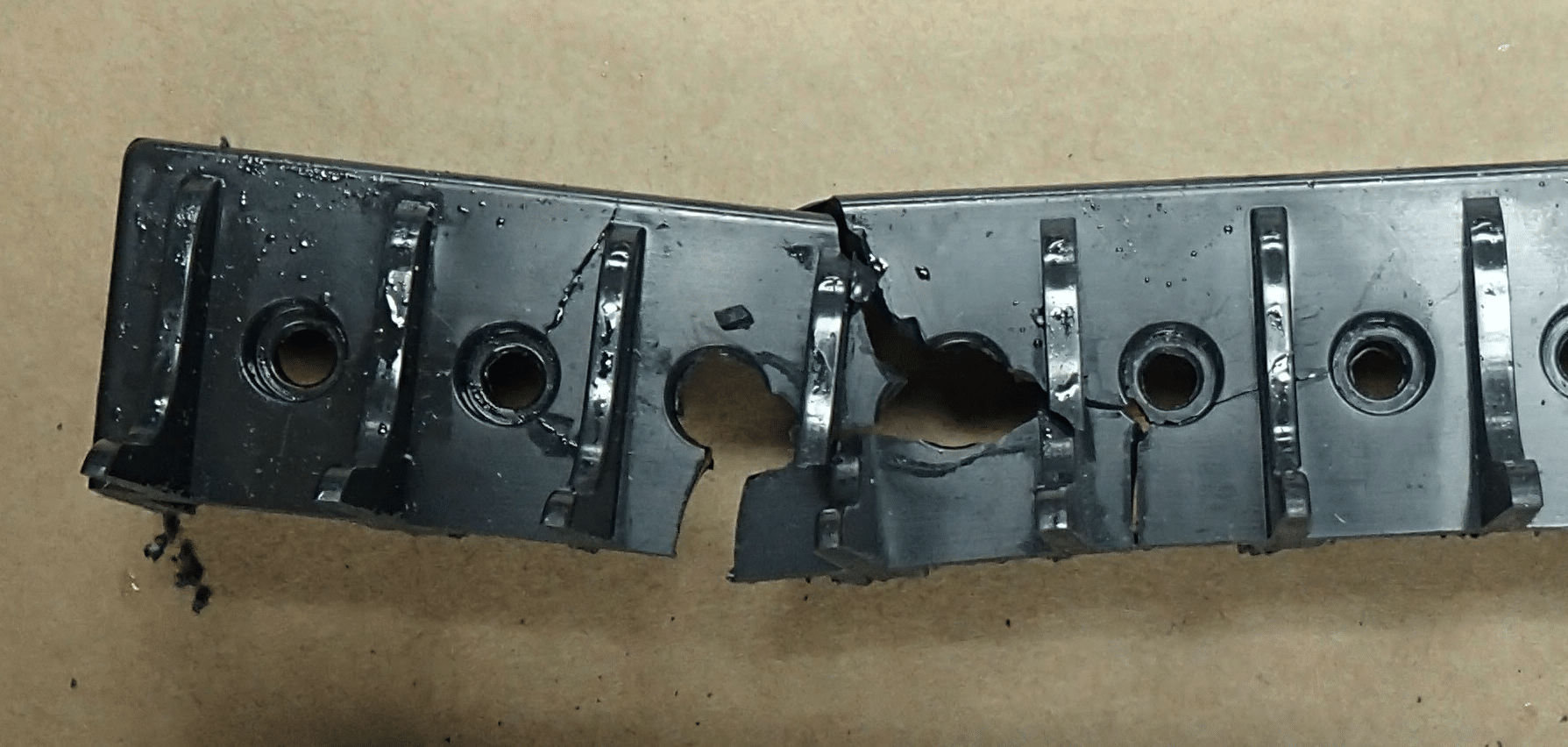
Pictured: A sectioned black plastic assembly with a row of metal-lined ports, showing a large irregular fractured opening and loose debris where material has broken away
Most people assume that the surfaces of plastic parts and medical devices can be cleaned/disinfected using normal cleaning products. However, many cleaners contain aggressive chemicals that can cause catastrophic failure of plastic parts.
Chemical compatibility belongs to the specific polymer, not to plastics in general, so a cleaner that is harmless on one material can attack another. Aggressive solvents and surfactants are absorbed into the surface, where they soften the material, extract additives and lower the stress the part can carry before it cracks. Parts already under load fail first, which includes press fits, threaded joints and anything moulded with high residual stress.
CPVC chemical resistance and compatibility
Plastic failure intelligence, monthly
Forensic case studies, failure-mode explainers, and plastics standards updates from our polymer scientists.
About one email a month. Unsubscribe anytime.
Related articles
Discuss your matter with a polymer scientist
Our experts provide independent technical opinion on plastic and polymer failures.