
Polymer & Materials Consulting
Prevent Plastic Failures Before They Reach the Field
The same PhD polymer scientists who determine why plastic parts fail in litigation also help you prevent those failures before they happen. We advise on material selection and qualification, scientific molding and process optimization, quality-control systems, and reverse engineering, backed by a network of independent, A2LA-accredited affiliate laboratories. If it involves a polymeric material, we have the experience and credibility to get you the right answer the first time.
In the Lab
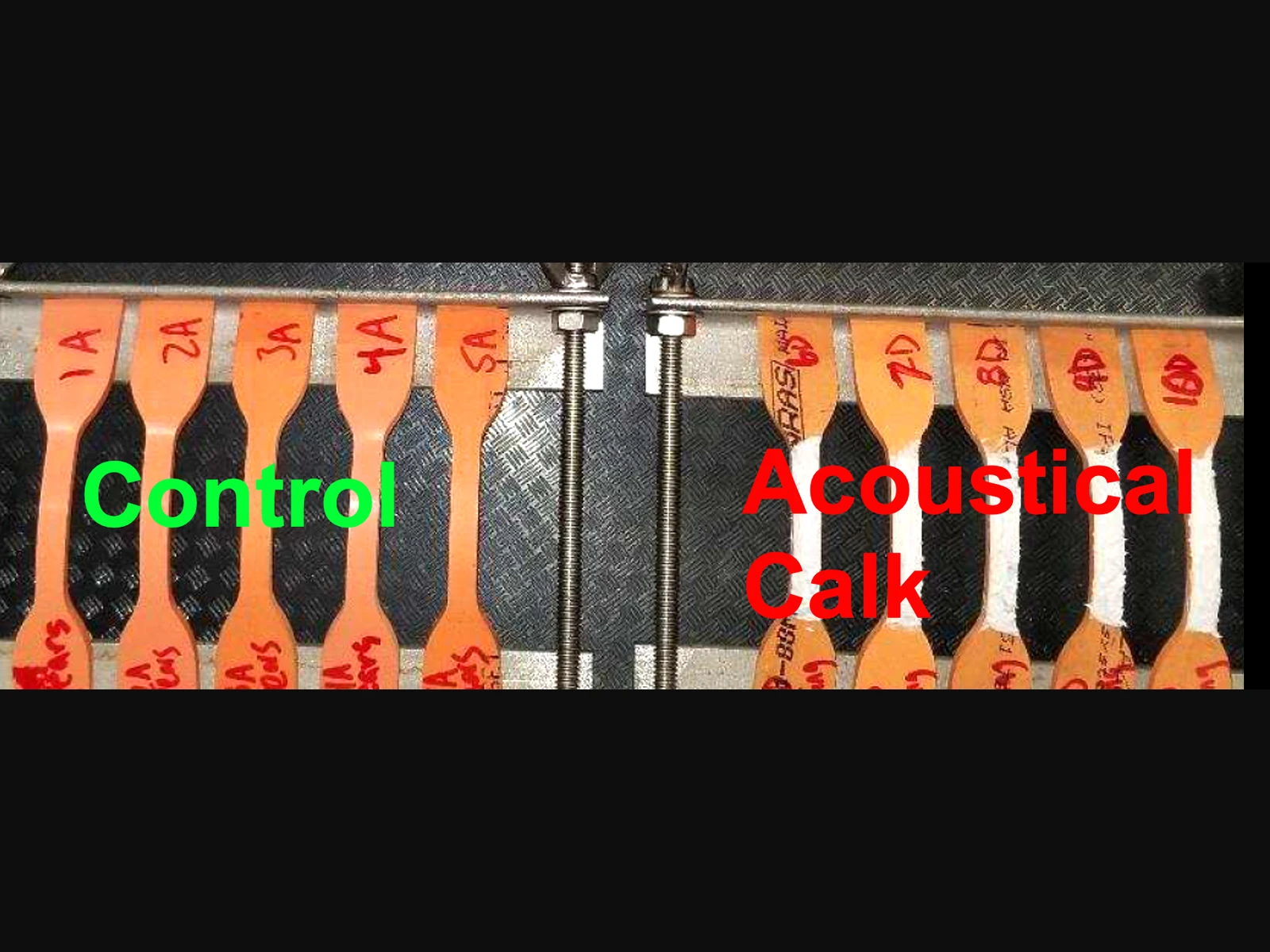
Pictured: ASTM D543 chemical-resistance specimens
Client Matters
Experts
Accredited Affiliate Labs
Why Prevention Pays
Material selection is the opposite end of the bench from failure analysis: it stops the failure before it happens. A common example: polycarbonate (PC) and acrylic (PMMA) are chosen for clarity and toughness, but because they are amorphous they are highly prone to environmental stress cracking when they contact hydrocarbon chemicals. When a product may ever see a chemical, we routinely recommend clarified polypropylene (PP) instead, which resists it. When that advice is ignored, failure usually follows. In another engagement a company asked us to confirm a new CPVC fire-sprinkler antifreeze was compatible with CPVC before they shipped it; our testing showed the new antifreeze was not CPVC compatible, and they stopped commercialization, avoiding large downstream liability. Getting the material right up front costs a fraction of a recall or a lawsuit. Bring us in alongside your in-house team early, and we help you predict and prevent those failures, not only prove them after the fact.
What We Deliver
Five consulting capabilities, each with a concrete deliverable.
Material Selection & Qualification
We define the service requirements (chemicals, temperature, pressure, stress, required service life), then use a dynamic finite-element material library to identify the grade that will survive, and qualify incoming material against spec.
Deliverable: Material recommendation and qualification report.
Polymer Process & Scientific Molding Optimization
When a molder fights a recurring defect, we determine whether a Scientific Molding program was followed; if not, we run it on-site to prove which process variables control part quality.
Deliverable: Process-optimization report and production troubleshooting.
QC System Development & Lab Setup
We build polymer QC systems from an FMEA and from failure analysis of returned parts: incoming-material tests (FTIR, DSC, melt flow, additive verification by HPLC), in-process monitoring (melt temp, color, contamination, pressure/torque), and final-product strength, chemical-resistance, and residual-stress checks.
Deliverable: A QC system that catches bad lots before they ship, not paperwork.
Reverse Engineering & Deformulation
We measure mechanical and thermal properties, polymer chain-length distribution, and identify and quantify every additive, then compare old vs new materials side by side.
Deliverable: Deformulation report and material-equivalency findings.
Service-Life Prediction
Accelerated aging (Q10 / Arrhenius, run below the polymer's glass transition temperature) to predict how long a part will last under defined conditions.
Deliverable: A defensible minimum-service-life estimate with a stated confidence level.
Why Choose Us
Our consulting is informed by what we see in the courtroom. The same team that has supported 580+ litigation-related projects and dissected thousands of failed plastic products now applies that pattern recognition to your design, material, and process decisions. Most of our experts hold a PhD and have decades of industry experience, including a Society of Plastics Engineers Hall of Fame inductee. We bring capabilities most consultancies do not: dynamic, supercomputing-class FEA for fatigue-resistant part design, mold fill-and-pack analysis for optimal gate location, Scientific Molding, and A2LA-accredited testing. We follow the Scientific Method on every engagement: understand the problem, research it, form a hypothesis, and test to prove or disprove it.
How We Work
Three engagement paths, each starting from the Scientific Method.
Material Selection
Capture the full service profile, build or obtain the 3D CAD model, run dynamic FEA against the material library to shortlist grades that survive the expected stresses, then apply Design for Manufacturing and Assembly (DFMA), design the mold (mold fill-and-pack) for optimal gate location, prototype, predict service life, and finish with a Failure Mode and Effects Analysis (FMEA).
Process Troubleshooting
Confirm whether a Scientific Molding program was followed; if not, we go on-site and run it, which usually isolates the variable causing the defect.
QC System Build
Start from an FMEA and failure analysis of returned parts, then specify the incoming, in-process, and final-product tests and acceptance criteria that catch failure-prone lots before they ship.
Representative Engagements
Anonymized examples that show what these engagements look like in practice.
Extrusion Productivity
A maker of storage bags wanted higher output; using dynamic, supercomputing-class flow modeling we redesigned the extrusion dies and nearly doubled their production rate.
Molding Defect Eliminated
An injection molder had a high part-failure rate; our analysis showed the parts were defectively molded, and our molding expert used the Scientific Molding process on-site to find and eliminate the cause.
Pre-Market Compatibility Screen
Before launch, a company had us test a new CPVC antifreeze for CPVC compatibility; it failed, and stopping the launch averted significant liability.
Material-Substitution Detection
When a molder quietly switches resin grade or supplier, we prove it with gel permeation chromatography (chain-length distribution) plus LC-MS (additive package), so non-conforming lots get caught.
Industries We Serve
We work across construction, manufacturing, medical, transportation, energy, and aerospace. In regulated sectors we align our work to the governing quality standards, AS9100D in aerospace and ISO 13485 for medical devices, which define how testing is performed and documented and what regulators and courts treat as trustworthy data. Our construction work increasingly feeds back into ASTM standards revisions to improve plumbing product and installation reliability.
Frequently Asked Questions
What product, quality, and engineering teams ask before engaging us.
Related Capabilities
Specialized services that frequently pair with materials and process consulting.
Design & Engineering Consulting
FEA, mold flow, and production-ready plastic part design.
Learn moreForensic Testing & Analysis
A2LA-accredited affiliate labs: FTIR, SEM, DSC, GPC, GC/MS, CT.
Learn moreMaterials Testing
Court-admissible polymer characterization and qualification.
Learn morePlastic Molding Defects
Root-cause analysis and remediation of injection-molding defects.
Learn moreAccreditations & Affiliations
Independent accredited labs across North America, Europe, Asia-Pacific, Australia, and the Middle East

Get the Material and Process Right
A team of PhD polymer scientists, drawing on the same network of independent, A2LA-accredited affiliate labs that supports our litigation cases.
Engineer / Product Team
Selecting a material or validating a design before you commit to tooling?
Request a Free Consultation