
Forensic Pipe Failure Analysis
CPVC & PEX Pipe Failure Analysis for Litigation, Subrogation & HOAs
When a plastic piping system fails, Plastic Expert Group's forensic team determines exactly why it failed, and who is responsible. Our experts have investigated CPVC and PEX failures in more than 50 buildings over two decades, diagnosing environmental stress cracking, chlorine oxidation, and installation and manufacturing defects with court-ready testing through a network of independent, A2LA-accredited affiliate laboratories. We work with plaintiff and subrogation attorneys, HOA boards, and insurance carriers, delivering non-destructive inspection, root-cause analysis, expert opinion reports, and remediation plans built to withstand Daubert scrutiny.
Retained by both plaintiff and defense, for technical objectivity, not advocacy.
In the Lab
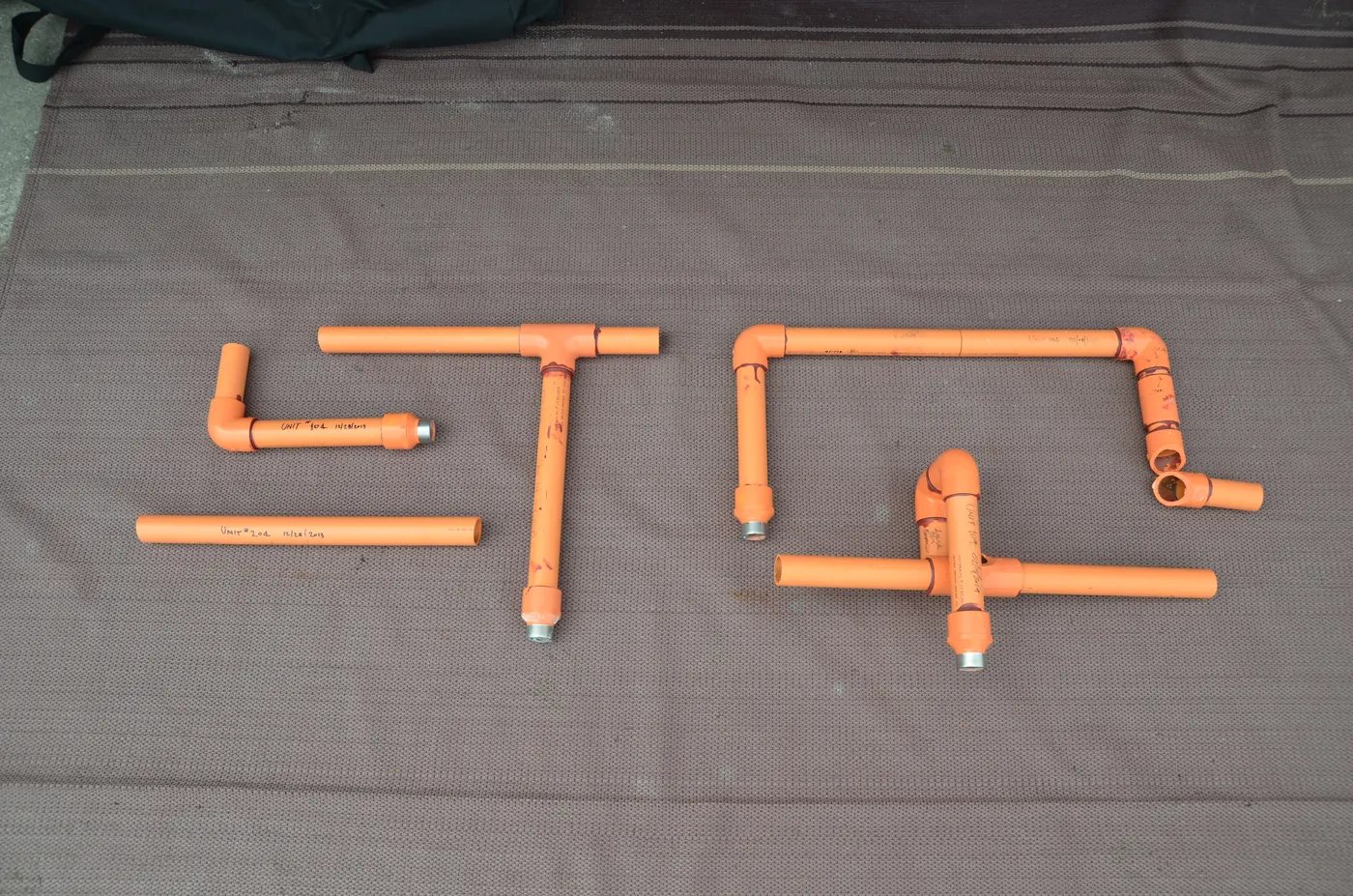
Pictured: CPVC pipe failure analysis
580+
Litigation-Related Projects
50+
Buildings Investigated
A2LA
Accredited Affiliate Labs
ASTM F17
Plastic-Piping Standards Contributors
Case Snapshot
Recognize Your Case in 30 Seconds
Two at-a-glance fact patterns we see most often. Experience points us to a likely root cause on sight; our established testing protocols confirm the definitive root cause with minimal time and expense.
Snapshot A: CPVC Fire Sprinkler
- Case Type
- Insurance subrogation, construction defect, HOA property damage
- Setting
- Multi-family residential (condominiums); high-rise and hospitality
- Pipe Material
- CPVC fire-sprinkler piping (life-safety system)
- Failure Mode
- Environmental stress cracking (ESC) from incompatible acoustical/firestop caulk or improper joint installation
- Our Role
- Plaintiff / subrogation expert witness, forensic analyst, remediation consultant
- Services
- Ultrasonic NDT, FTIR, SEM, ASTM D543, expert opinion report, remediation plan
- Outcome
- Systemic defect documented; remediation scope and cost basis established
Snapshot B: PEX Domestic Water
- Case Type
- Product liability, construction defect, class-action support
- Setting
- Single- and multi-family residential; warm, high-chlorine climates (CA, FL, TX, HI)
- Pipe Material
- PEXa / PEXb / PEXc domestic water, especially hot recirculating lines
- Failure Mode
- Chlorine oxidative degradation, expansion-fitting stress cracking, premature antioxidant depletion
- Our Role
- Plaintiff expert witness, forensic analyst
- Services
- FTIR, SEM, DSC (oxidative induction time), GC-MS, mechanical testing, A2LA-accredited ASTM F2023 / D543
- Outcome
- Manufacturing defect established with clear data; individual and class-action litigation support
The Challenge
Two Failure Patterns, Two Different Evidentiary Problems
CPVC fire-sprinkler cases
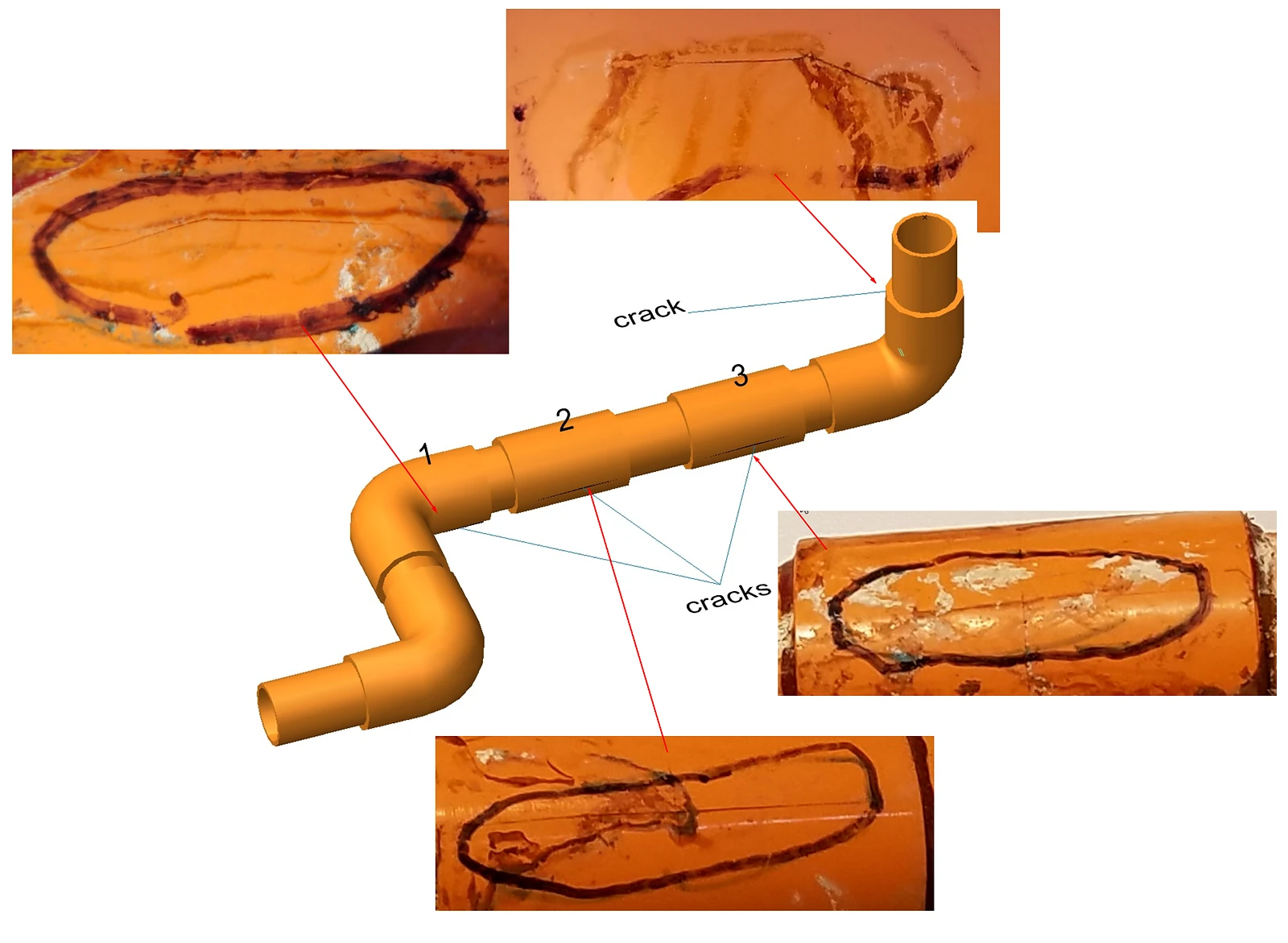
CPVC is a life-safety system, and its failures are rarely simple. One building can expose the pipe to a dozen or more suspected root causes of ESC at once. The challenge is proving which chemical caused the failure and tracing it to the responsible product and party. Timing compounds it: CPVC failures often surface 1 to 20 years after installation, brushing against many states' statute of repose, and installation-quality issues can quietly embrittle a system for a decade before the first leak. Because so much turns on installation, the evidence must be captured non-destructively and survive a Daubert challenge.
PEX domestic-water cases
PEX is sold as the modern alternative to copper and CPVC, so owners assume a leak means defective pipe, while manufacturers reflexively blame the installer or the water. The hard part is separating three overlapping causes, chlorine oxidative degradation, installation error, and manufacturing defect, with evidence a manufacturer's own QC data cannot rebut. Manufacturers point to ASTM F876/F877 compliance "at the time of manufacture," which says nothing about performance after years of hot, chlorinated, recirculating water. Warm, aggressive-water regions (chlorine dioxide in CA, FL, TX, HI) drive failures that accelerated lab tests (ASTM F2023, run on purified water and sodium hypochlorite) never predicted.
HDPE Pressure Pipe
HDPE Pressure Pipe Failure Analysis
Beyond building plumbing, Plastic Expert Group analyzes high-density polyethylene (HDPE) pressure-pipe failures across municipal water and sewer force mains, natural-gas distribution, industrial and mining process lines, and nuclear and power-plant cooling-water systems. HDPE rarely fails from a single cause, and the joint is usually where the case is won or lost.
Slow crack growth (SCG)
Brittle-appearing cracks that grow slowly at low stress over years, usually starting at a scratch, a rock impingement point, a squeeze-off, or a fitting. The dominant long-term HDPE failure mode.
Fusion-joint failure
Butt-fusion and electrofusion joints are the most common failure location: cold or contaminated joints, misalignment, and out-of-spec fusion parameters. We assess the joint interface directly.
Rock impingement and point loading
Buried pipe bearing on rock or debris concentrates stress and initiates slow crack growth, a frequent municipal and gas-distribution finding.
Fatigue and pressure surge
Repeated pressure cycling and water-hammer surge drive fatigue crack growth, especially at joints and fittings.
Oxidative degradation
Chlorine, sodium hypochlorite, chloramine, chlorine dioxide, and ozone disinfectants deplete the antioxidant package over time (measured by OIT), embrittling the inner wall in potable and recirculating service. Chlorine dioxide is the most aggressive.
Installation and third-party damage
Squeeze-off damage, over-deflection, burial-stress buckling, and excavation strikes, separated from resin and manufacturing defects.
Fusion-joint forensics
Most HDPE disputes turn on joint quality. We assess butt-fusion, electrofusion, and socket-fusion joints directly, using CT scanning, high-speed tensile testing, bend testing (including Face-Bend and Reverse-Bend methods, ASTM F3183), and cross-sectional microscopy of the fusion interface to separate a defective joint from a defective pipe or a defective installation.
Non-destructive inspection
We inspect pipe and fusion joints non-destructively with ultrasonic techniques and CT scanning locating cold joints, voids, and crack initiation before a line is cut out, so the evidence is preserved and the right parties are put on notice.
Standards-level authority
Our HDPE experts include a Plastic Pipe Institute (PPI) Hall of Fame authority on polyethylene piping and an author of ASTM F17 pipe and fitting standards, with committee experience across AWWA (C901 and C906) and the ASME Boiler and Pressure Vessel Code, including nuclear-grade HDPE piping.
Approach & Methodology
How We Build a Pipe-Failure Case
Every test is chosen to answer a legal question, not just a scientific one: reproducible, non-destructive where possible, and court-ready.
- 1
On-site non-destructive inspection
We drain the system and inspect from the inside using a proprietary non-destructive inspection technique that navigates 90 degree and T-fitting corners, photo-documenting every joint against the manufacturer's instructions and ASTM F3328: vivid, defensible evidence of installation-code and contract violations.
- 2
Joint assembly verification
Our proprietary non-destructive inspection reveals whether joints were properly assembled, including whether a pipe was fully inserted and rotated in the fitting socket. In one 30-story condominium with 40 joint leaks in five years, it proved the pipes were not rotated inside the fitting socket after insertion, a clear installation defect.
- 3
FTIR contaminant identification
Every chemical has a unique infrared fingerprint. We match the contaminant on a failed CPVC fracture surface against a library of tens of thousands of compounds, then analyze the products that touched the pipe to pinpoint the source, connecting the chemical to the responsible party.
- 4
SEM fracture analysis
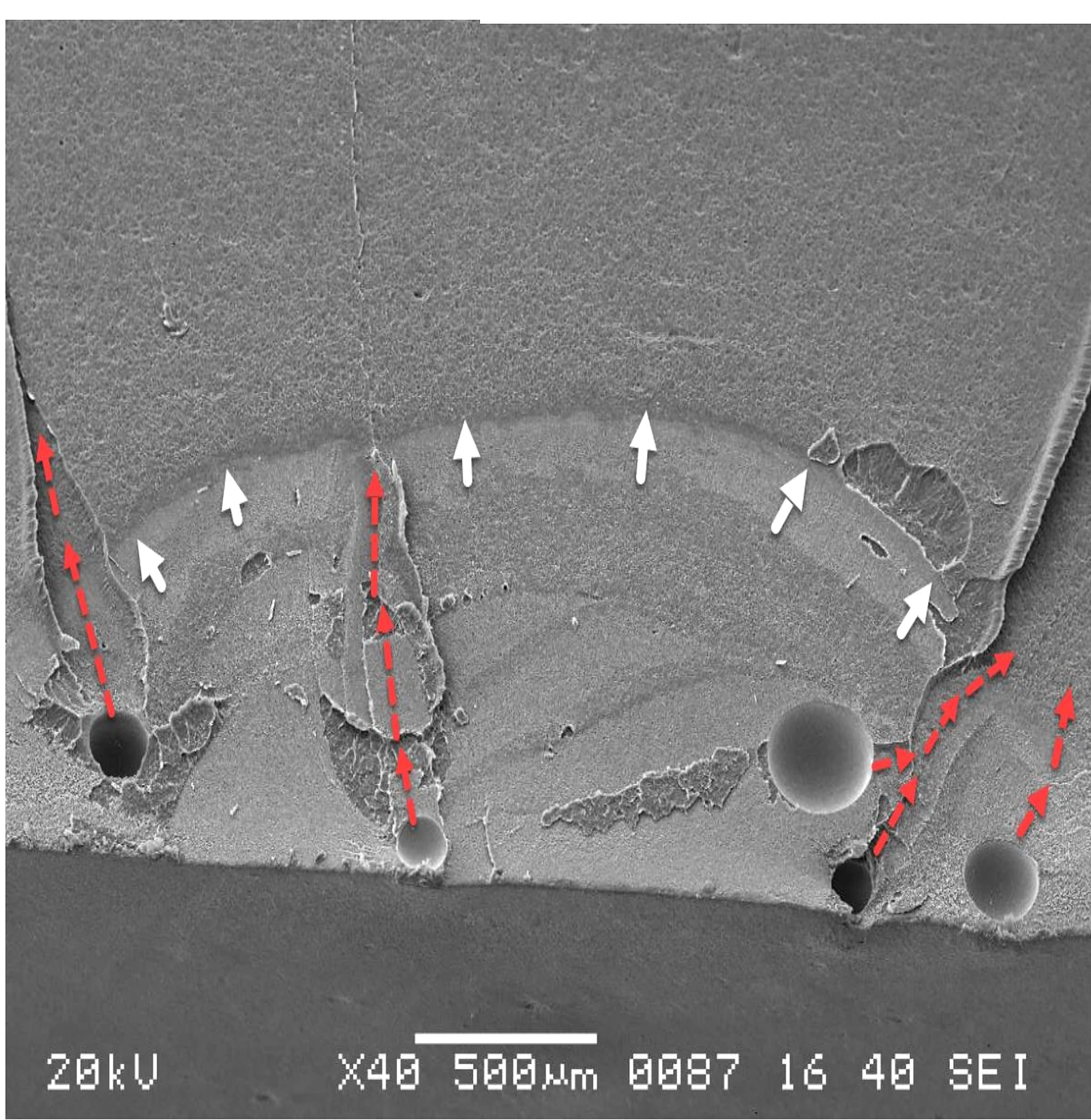
Scanning electron microscopy reveals where a crack began: the inside surface, the outside surface, or within the pipe wall. Each origin indicates a different failure mode, which lets us separate competing defect theories.
- 5
DSC / oxidative induction time (ASTM D3895)
Measures how much antioxidant stabilizer remains in a PEX wall. Our experts interpret the result against the pipe's 50-year design basis to determine whether it was adequately protected.
- 6
ASTM D543 chemical compatibility (A2LA-accredited)
A controlled, stressed-specimen tensile test proving whether a specific product (caulk, foam, cement) is chemically incompatible with CPVC, turning "we think the caulk did it" into evidence.
- 7
Remediation planning
A random statistical sample establishes at 95% confidence or better whether defects or contamination are systemic or localized, supporting targeted or full-system replacement and documenting prospective damages to the certainty courts require.
Key Findings
What Our Reports Establish
Root cause to a high degree of scientific certainty
When FTIR confirms an incompatible chemical on the fracture surface, we state it caused the ESC failure and that all pipe exposed to the chemical source must be replaced.
Chemical-to-source attribution
We tie the contaminant to the specific product and the party that supplied or installed it.
Defect vs. end-of-life (PEX)
Depleted antioxidants (ASTM D3895/OIT) plus inside-wall crack initiation after only a few years of hot chlorinated service is premature failure from an under-stabilized, defective pipe, not normal aging.
Systemic latent defect supporting full-replacement damages
Chemical contamination is a latent defect; failure is eventually certain but unpredictable in timing. For a life-safety system, that supports replacing all at-risk pipe, not just what has leaked.
Foreseeability
CPVC's chemical sensitivity has been known for decades; thin manufacturer warnings and the antioxidant-depleting PEXa/PEXc crosslinking chemistry make these failures foreseeable.
Outcome & Impact
What Our Work Produces
CPVC, a settlement built on data
In a large condominium with CPVC fire-sprinkler failures, our team identified the cause as acoustical and firestop caulks at wall penetrations that are highly incompatible with CPVC. A random statistical analysis established, at 95% confidence, that 71 to 90% of the wall-penetration caulks in the building were incompatible. We then measured how far the incompatible chemical migrates along the pipe (3.5 inches) and, for a margin of safety, recommended replacing all pipe within 7 inches of caulk at every wall penetration. Once the report was disclosed, it defined the scope and cost basis of the recommended remediation plan.
PEX, clear data, contested cases
Our PEX investigations produce evidence that is clear and unarguable, and we currently serve as experts in both individual suits and a class action against a major PEX manufacturer. The defining challenge in class-action and MDL matters is proving the failures are systemic and ongoing, not one-offs, so that all of the installed product is shown to be at risk.
The HOA path
When an HOA's non-destructive inspection reveals systemic failure, the board's attorney formally retains us; we circulate a destructive-testing protocol to defense experts, complete testing, and issue an expert report. From there matters settle or proceed to deposition, and we frequently prepare the remediation plan the board uses to scope and price the work.
Why This Matters for Your Practice
CPVC and PEX Failures From the 2000s Building Boom Are Hitting Now
The 2000s construction boom put enormous volumes of CPVC and PEX into buildings, and that pipe is now well into its service life and is failing now. CPVC remains popular and continues to fail because of its chemical sensitivity, thin manufacturer warnings, and marketing that overstates its chemical resistance. On the PEX side, the large majority of the failures we investigate trace to a single PEX manufacturer. If you manage or represent these buildings, two things matter most: act before the statute of repose closes (a proactive inspection preserves both safety and legal options), and retain a pipe-specific expert before the evidence is gone, because the failed sample is too often repaired over, discarded, or shipped to the manufacturer in the first 48 hours, and a spoiled sample is the hardest problem to overcome.
Quick-Reference Checklists
Two Lists, Side by Side
For Attorneys
Post-Failure Response (First 72 Hours)
- Video the water flowing from the failed pipe; photograph the surrounding area.
- Photograph the removal and repair of the piping.
- Secure the failed pipe sample; start a chain-of-custody form that stays with it.
- Wrap the sample in pure aluminum foil; bag and tag it with date and location.
- Store it in a controlled, secure environment.
- Retain a plastics-pipe forensic expert immediately, ideally before the sample is removed. Do not default to a generalist; Daubert exclusion is a real risk.
- In discovery, request first: GC, architect, and subcontractor contracts; the manufacturer's QC records for the failed lot; and product submittals for the pipe and every ancillary product that contacts it.
For HOAs & Property Managers
Proactive Risk Assessment
- Obtain the GC, architect, and subcontractor contracts and each subcontractor's product submittal list with SDS sheets.
- Commission a proprietary non-destructive inspection technique to assess residual service life before a failure occurs.
- If a failure happens, route all communication through your attorney first; let counsel manage contractor and carrier contact.
Chemical Incompatibility
Spray Foam, Fire Caulk & Beyond
CPVC is a good material choice for aqueous solutions of corrosive acids and for bleach: the vulnerability is specific, not general. CPVC is incompatible with the large majority of hydrocarbon chemicals, and only a narrow set of compounds is truly safe. Under water pressure, stressed CPVC absorbs migrating incompatible chemicals, and the result is environmental stress cracking. Pinpointing which chemical caused a specific failure is the heart of the analysis. See what CPVC resists, and what attacks it.
Esters: a leading culprit
Ester-based chemicals are among the most aggressive CPVC-incompatible compounds. They appear in spray polyurethane foam fire retardants, in many caulks, and in wire and cable sheathing, which is why they turn up so often in the CPVC failures we investigate.
Spray foam
Spray polyurethane foam (SPF) is incompatible with CPVC. Under the heat and stress of installation and service, the foam's ester fire-retardant and catalyst can migrate into the pipe wall and drive environmental stress cracking. Where SPF and CPVC share a space, that interaction has to be managed, and we advise on how.
Caulk and the limits of "approved" lists
Most CPVC manufacturers publish approved-caulk lists, but a pipe can still fail under a caulk labeled "compatible" when a compatibility test was inadequate or a batch was bad. One major CPVC manufacturer's published compatible-caulk list once included known incompatible caulks as being compatible with CPVC. The products are acoustical and firestop caulks containing diester plasticizers (DINP or DINCH), which is highly incompatible with CPVC. Our own fingerprint testing has identified these caulks in 45 separate client matters across at least six states since 2010. Likewise, while some spray-foam industry guidance maintains that spray foam will not cause CPVC failure when properly installed, all SPF contains an ester fire-retardant that is highly incompatible with CPVC; once it migrates into the pipe, ESC follows.
The next wave
Organic amines and non-ionic surfactants, common in moldicides and antimicrobial cleaners used on framing lumber in warm, humid regions, are emerging incompatibility sources to watch. When several incompatible chemicals are present, we prove the source of each and work with counsel to apportion liability.
FAQ
Common Questions About Pipe Failure Cases
Reference Table
Pipe Types, Manufacturers, and Trademarks We Analyze
This is a reference list of the pipe systems and brands we analyze. Inclusion does not imply any finding, defect, or criticism regarding any product or manufacturer.
| Pipe Type | Manufacturer | Trademark |
|---|---|---|
| CPVC, fire sprinkler | Lubrizol | BlazeMaster |
| CPVC, fire sprinkler | Harvel | BlazeMaster |
| CPVC, fire sprinkler | Viking | BlazeMaster |
| CPVC, fire sprinkler | IPEX | BlazeMaster |
| CPVC, fire sprinkler | Tyco | BlazeMaster |
| CPVC, fire sprinkler | Spears | FlameGuard |
| CPVC, fire sprinkler | Victaulic | FireLock |
| PEX, domestic water | Uponor | Not specified |
| PEX, domestic water | NIBCO | Not specified |
| PEX, domestic water | Zurn | Not specified |
| Polypropylene (PP-R) | Aquatherm | Not specified |
Explore our pipe-failure pages
Related Investigations & Services
Plastic Failure Analysis
All polymer failure modes beyond piping: products, parts, joints, coatings, and roofing membranes.
Read moreCPVC Fire Sprinkler Pipe Failure
Environmental stress cracking, incompatible caulk and foam, statute-of-repose timing, and 30-story condo case files.
Read moreCPVC Environmental Stress Cracking
The failure science: how ESC happens, how we prove it, and how to prevent it.
Read morePEX Pipe Failures
Chlorine oxidation, expansion-fitting cracking, antioxidant depletion, and class-action support against a major PEX manufacturer.
Read moreData Center Piping
CPVC and PVC drain, chilled-water, and condensate line failures behind mission-critical data-center water-loss events.
Read moreWater-Loss & Subrogation Support
Forensic root-cause analysis of CPVC, PEX, and polybutylene pipe failures behind water-damage claims, for carriers, adjusters, and subrogation counsel.
Read moreRelated Services
Accreditations & Affiliations
Independent accredited labs across North America, Europe, Asia-Pacific, Australia, and the Middle East

For Attorneys & Insurers
Handling a CPVC or PEX Pipe Failure Case?
Our network of independent, A2LA-accredited affiliate labs and our expert-witness team have investigated pipe failures in 50+ buildings and supported 580+ litigation-related projects nationwide. Get a no-cost initial case review.
For HOAs & Property Managers
Worried About Your Building's CPVC or PEX System?
A non-destructive on-site inspection identifies systemic degradation before failures occur and produces the remediation plan and documentation your board needs to protect the property and pursue responsible parties.
Tell Us About Your Pipe Failure Case
Share the building, the material, and what you have. We will respond within one business day with next steps and whether a non-destructive inspection or sample review makes sense first.
Fast Initial Review
No-cost initial assessment for attorneys, insurers, manufacturers, and property owners.
Daubert-Aligned Methodology
A2LA-accredited testing built to survive a Daubert challenge.
Prefer to Call?
+1 (989) 281-4465