
Forensic Plastic Failure Analysis
Plastic Failure Analysis & Expert Witness Services
When a plastic product or piping system fails, Plastic Expert Group determines the root cause and who is responsible. Our PhD-led forensic team has resolved 580+ litigation-related projects for both plaintiff and defense counsel, diagnosing environmental stress cracking, oxidative degradation, fatigue, and design and manufacturing defects across CPVC, PEX, PP-R, PVC, ABS, nylon, polycarbonate, composites, adhesives, and coatings. We pair non-destructive CT scanning and finite element analysis with testing through a network of independent, A2LA-accredited affiliate laboratories to deliver court-ready expert opinion reports that withstand Daubert scrutiny.
The plastic piping from the 2000s building boom is entering its failure window now.
In the Lab
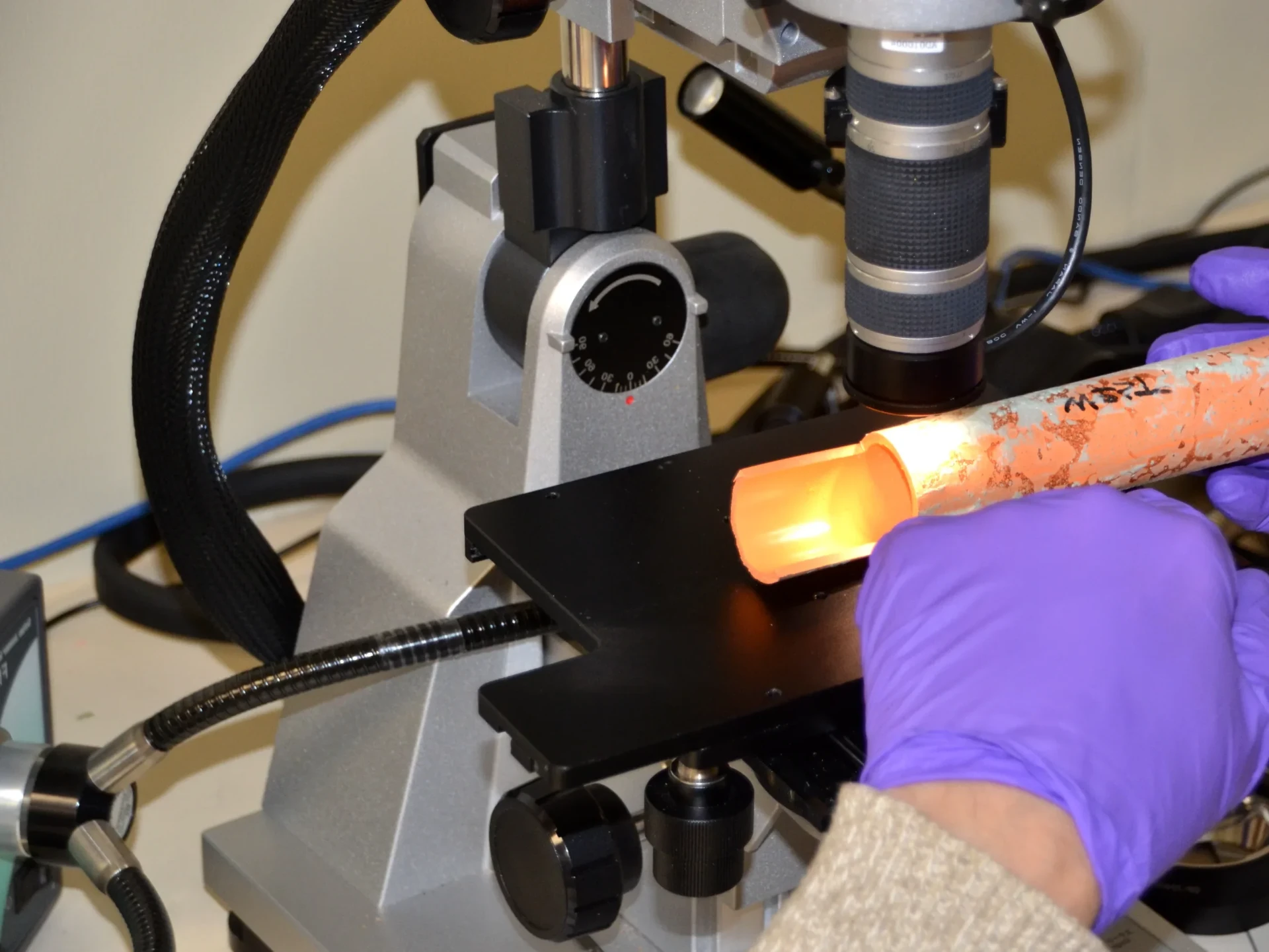
Pictured: Plastic failure specimen analysis
2,000+
Client Matters
580+
Litigation-Related Projects
70+
Globally Recognized Experts
Global
US, Europe & Asia-Pacific
Why This Matters
The CPVC and PEX Failure Wave Is Hitting Now
Buildings from the 2000s construction boom have CPVC and PEX systems that are now entering the failure window. CPVC is engineered to last 50+ years, but installation-quality issues at the joints can accelerate aging, so we routinely see systems turn brittle after about ten years, where a bumped toilet tank water shutoff valve snaps off and floods a unit. PEX and PP-R systems fail as antioxidant stabilizers are extracted from the inside wall in hot recirculating lines. The practical lesson for counsel and property managers: act early. Preserve the evidence in the first days, and consider a proactive proprietary non-destructive inspection technique on undamaged pipe, because installation defects are only visible from the inside and a pressure test will not reveal them.
Case Snapshot
Recognize Your Case in 30 Seconds
- Case Type
- Construction defect / insurance subrogation
- Setting
- Multi-family residential (a seven-building, three-story apartment complex)
- Material
- CPVC fire-sprinkler piping
- Failure Mode
- Defective installation; environmental stress cracking
- Our Role
- Plaintiff expert witness, forensic analyst
- Services
- Proprietary non-destructive inspection techniques, CT scanning, FTIR, SEM/EDS, ASTM D543, expert opinion report
- Outcome
- Defective installation proven in the four buildings that failed; the findings resolved the matter and the four buildings were repiped
The Challenge
Why Plastic Failure Cases Are Hard, and How We Cut Through
Plastic failure cases are hard for reasons that have little to do with the plastic:
- Causation is rarely singular. A failure is often the synergistic result of a defective pipe and a defective installation, and defense counsel will push age-related degradation, installation damage, water hammer, and chemical incompatibility all at once. We have worked matters with as many as eleven named defendants, each with its own expert pointing at the others.
- The evidence is fragile and frequently lost. In the rush to put a system back in service, the failed component is repaired over, discarded, or spoiled, and without it a root-cause opinion to a reasonable degree of scientific certainty becomes very difficult.
- Manufacturers sometimes rely on their own internal, unvalidated compatibility tests rather than a standardized method, then list an incompatible product as compatible.
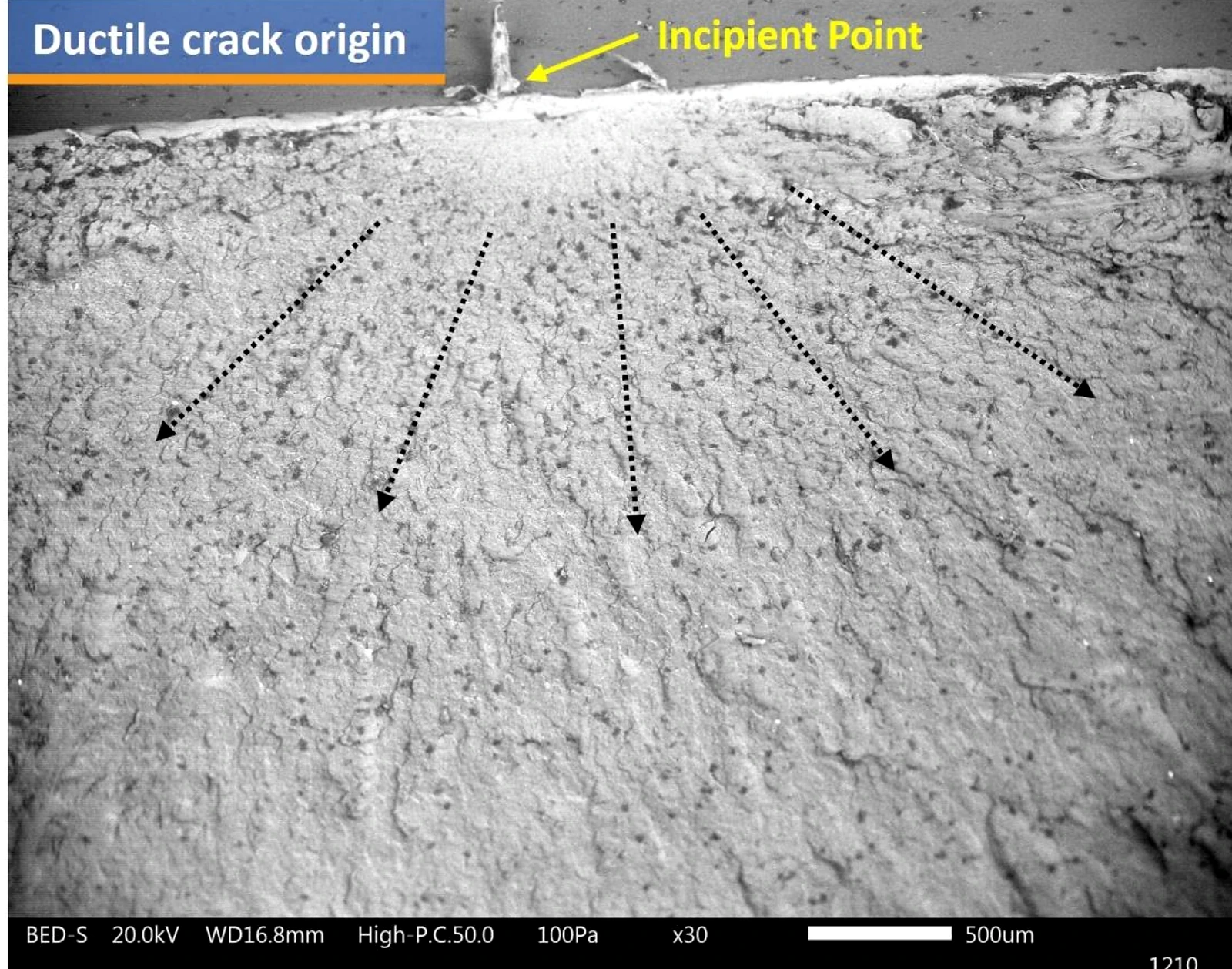
The forensic answer to all three is disciplined methodology: rule out the alternative theories with physical evidence (environmental stress cracking shows chemical stains at the crack origin; the contaminating chemical is identified by FTIR and GC-MS and traced to its source), and document everything to a standard that survives a Daubert challenge.
Approach & Methodology
How We Build a Plastic Failure Case
Our process preserves evidence, keeps costs down, and produces vivid, defensible exhibits. Every test answers a legal question, not only a scientific one.
- 1
Preserve the evidence
We begin non-destructively, with high-resolution CT scanning and optical microscopy that locate the failure and the crack origin without destroying the evidence and feed exhibits a jury can understand.
- 2
Determine the failure mode and root cause
Using our proprietary forensic methods and a full A2LA-accredited test suite, we determine the failure mode and, where the evidence allows, the root cause, and we trace any contaminant to its source.
- 3
Report to a Daubert-aligned standard
We anchor every opinion to published standards (for example NFPA 13, ASTM F442, ASTM F3328) and follow the Scientific Method, with controls, replicate testing, and statistical analysis.
Key Findings
What Our Reports Establish
Root cause with a clear basis
We identify the failure mode (for example ESC), the specific chemical that caused it, and the product and party that were its source.
Defect vs. defense theory
ESC is distinguished from age, installation damage, or water hammer by the fracture-surface signature (chemical stains) plus chemical identification, ruling the alternatives out decisively.
Manufacturing vs. design defect
A manufacturing defect is specific to a sample or lot; a design defect (for example the wrong material selected, no FMEA performed) can extend across a product line and supports MDL or class treatment.
Material patterns
CPVC and ABS most often fail by chemical incompatibility (ESC); PEX and PP-R most often fail by oxidative degradation as hot, chlorinated water extracts antioxidant stabilizers.
Systemic risk and full-replacement damages
Statistical sampling across a building establishes whether contamination is systemic or localized; for life-safety systems we recommend full replacement when the data prove systemic compromise.
Scope of Practice
Failure Modes & Materials We Analyze
Failure Modes
- •Environmental stress cracking (ESC)
- •Oxidative degradation and embrittlement
- •Fatigue fracture
- •Creep rupture
- •UV and thermal degradation
- •Chemical attack
- •Design-induced stress concentration
Each leaves a distinct fracture-surface signature.
Materials
Explore by Failure Type
Pipe Failure Analysis
CPVC, PEX, PP-R, PVC piping failures for litigation, subrogation, and HOAs.
Read moreCPVC Fire Sprinkler
ESC from incompatible caulk and foam; statute-of-repose timing.
Read morePEX Pipe Failures
Chlorine oxidation, antioxidant depletion, and class-action support.
Read morePlastic Molding Defects
Knit-line, void, and processing defects from injection and blow molding.
Read moreMaterials Testing
A2LA-accredited FTIR, SEM, DSC, GPC, GC-MS, and CT scanning.
Read moreWater-Loss & Subrogation
Forensic root-cause support for carriers, adjusters, and subrogation counsel behind water-damage claims.
Read moreData Center Piping
CPVC and PVC drain, chilled-water, and condensate failures behind data-center water-loss events.
Read moreAttorney Quick-Reference Checklist
First 72 Hours After a Failure
- Interview potential experts and confirm none are conflicted.
- Once retained, get the expert's instructions for proper collection and handling of the evidence.
- Sensitize the client to careful documentation, preservation, and secure storage of the evidence.
- Give the expert the building details (age, construction, and the failure history).
- Arrange a non-destructive assessment to determine the correct parties to put on notice.
- Keep a detailed chain-of-custody document with the evidence.
- Photograph everything touching or near the failure, in focus and at multiple distances.
Chemical Incompatibility
Spray Foam, Caulks, and the Sources We Trace
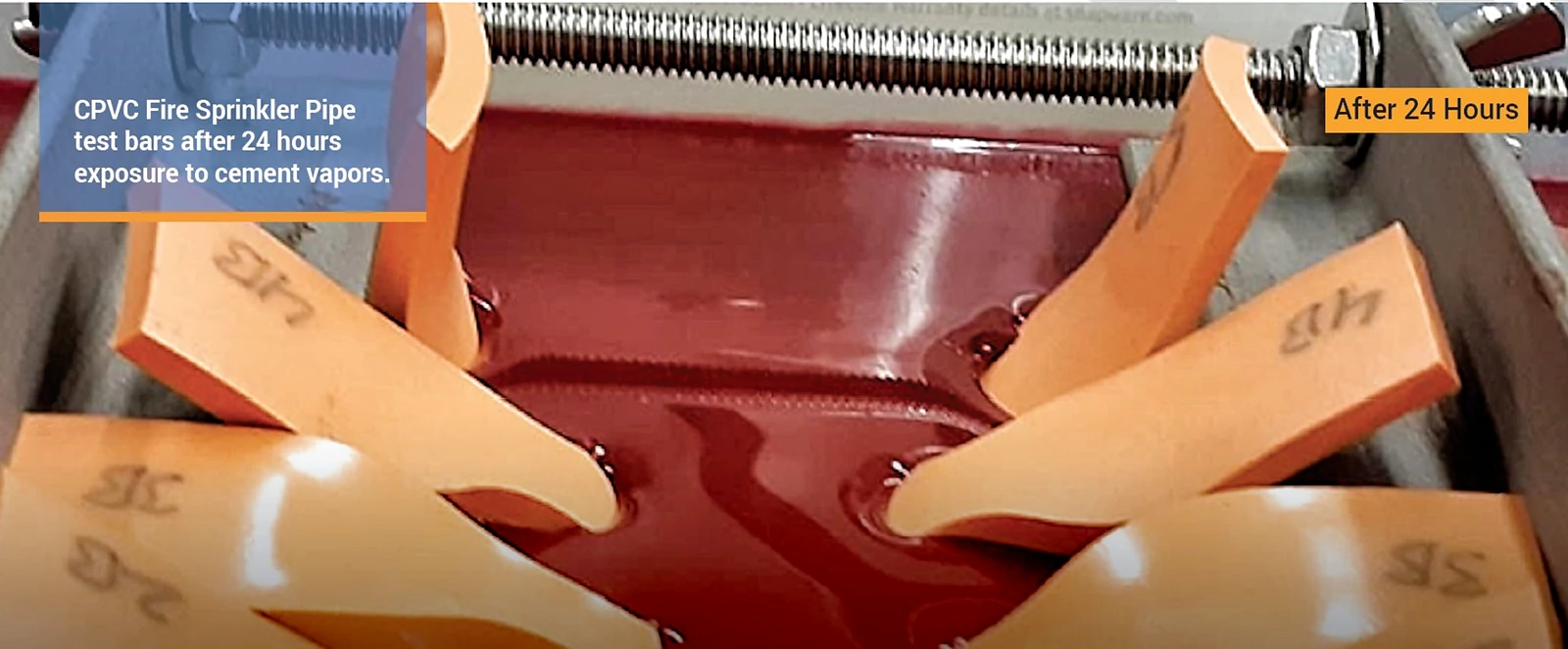
CPVC is a good choice for aqueous solutions of corrosive acids and for bleach. The vulnerability is specific, not general. CPVC is incompatible with the large majority of hydrocarbon chemicals. Spray polyurethane foam (SPF) is a frequent cause of CPVC failure: it carries common fire retardants and catalysts, both highly incompatible with CPVC. Heat and water (including condensation) drives their migration into the pipe; these chemicals attack the CPVC, embrittling it. See what CPVC resists, and what attacks it.
Industry guidance on spray foam has historically emphasised the heat of the curing reaction rather than the chemical incompatibility. CPVC manufacturers themselves recommend wrapping the pipe in a barrier before foaming, which is the control we look for on site.
Caulks are the other major source. A major CPVC manufacturer's published compatible-caulk list once included known incompatible acoustical and firestop caulks. Both contain diester plasticizers (DINP or DINCH) and are incompatible with CPVC. We have identified these caulks by fingerprint testing in 45 separate client matters across at least six states since 2010. Moldicide overspray (organic amines) on framing lumber in humid regions is a growing source, especially where it lands on absorbent solvent cement residues at pipe/fitting joints.
FAQ
Common Questions About Plastic Failure Cases
Related Services
Accreditations & Affiliations
Independent accredited labs across North America, Europe, Asia-Pacific, Australia, and the Middle East

Plastic Failure Case Review
Handling a Plastic Failure Case?
Our PhD-led forensic team has resolved 580+ litigation-related projects for plaintiff and defense counsel nationwide. Get a no-cost initial case review.
Tell Us About Your Plastic Failure Case
Share the product or system, the material, and what evidence you have preserved. We will respond within one business day with next steps and whether a non-destructive inspection or sample review makes sense first.
Fast Initial Review
No-cost initial assessment for attorneys, insurers, manufacturers, and property owners.
Daubert-Aligned Methodology
A2LA-accredited testing built to survive a Daubert challenge.
Prefer to Call?
+1 (989) 281-4465