
Pipe Failure
Repairing Frozen CPVC Pipes
By Dr. Duane Priddy Sr. · Published February 22, 2021
FORENSIC EVIDENCE
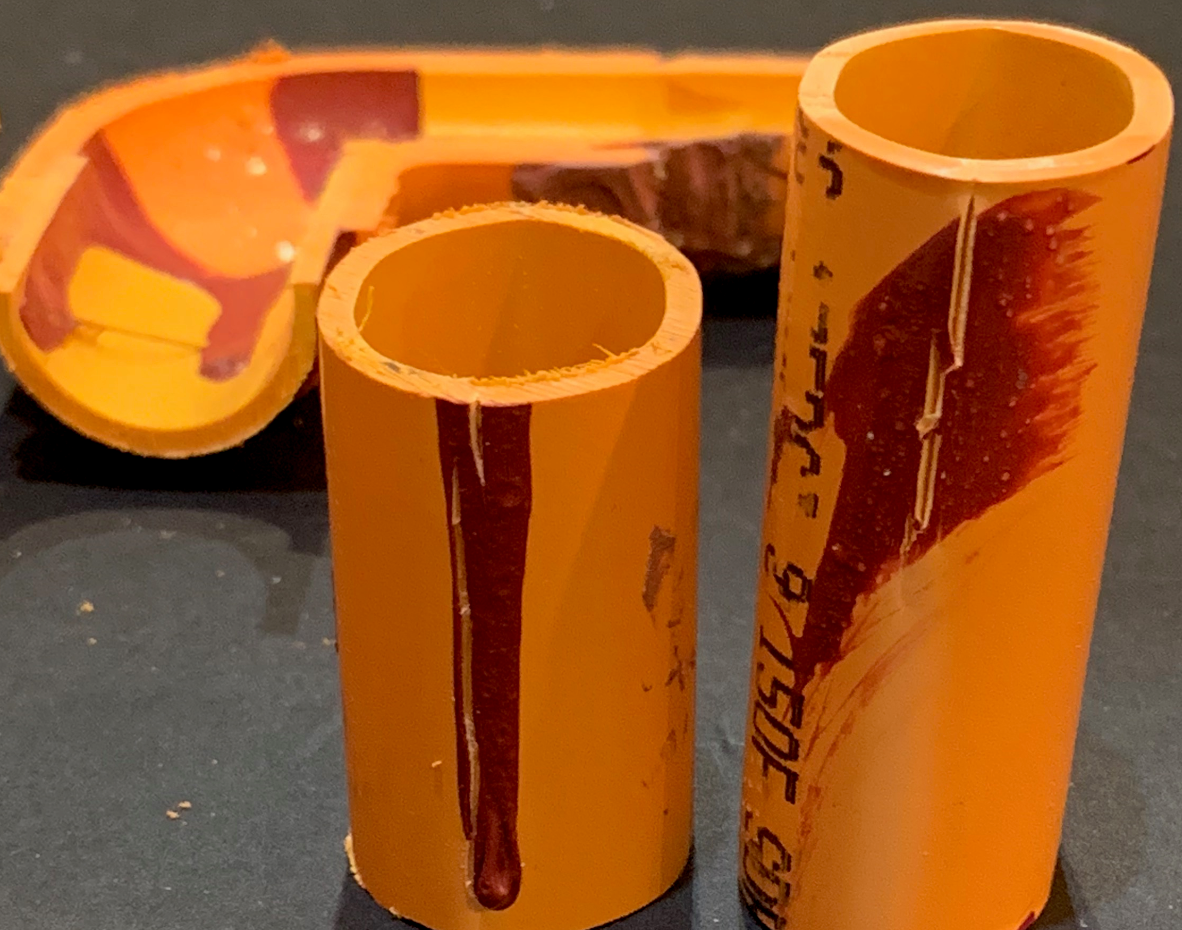
Pictured: Sectioned orange CPVC pipe specimens and an elbow fitting on a dark bench, with dark solvent cement smeared and dribbled down the inside walls
Following the great Texas freeze disaster of 2021, most buildings suffered freeze damage to the water piping systems leading to a shortage of qualified plumbers to do the repairs. The plumber shortage caused people to seek to repair their piping systems themselves.
CPVC joints are made with solvent cement, which chemically softens the pipe surface so the parts fuse together. Applied too heavily, the excess runs into the joint and pools inside the pipe, where it keeps attacking the wall long after the repair looks sound. Cement pockets at joints are a common origin of environmental stress cracking, so a hurried repair can produce a crack in a section of pipe that the freeze never damaged.
How we determine the root cause of a plastic pipe failure
Plastic failure intelligence, monthly
Forensic case studies, failure-mode explainers, and plastics standards updates from our polymer scientists.
About one email a month. Unsubscribe anytime.
Related articles
Discuss your matter with a polymer scientist
Our experts provide independent technical opinion on plastic and polymer failures.