Product Design
Which Window Should I Use, Glass or Plastic?
By Dr. Duane Priddy Sr. · Published October 8, 2024
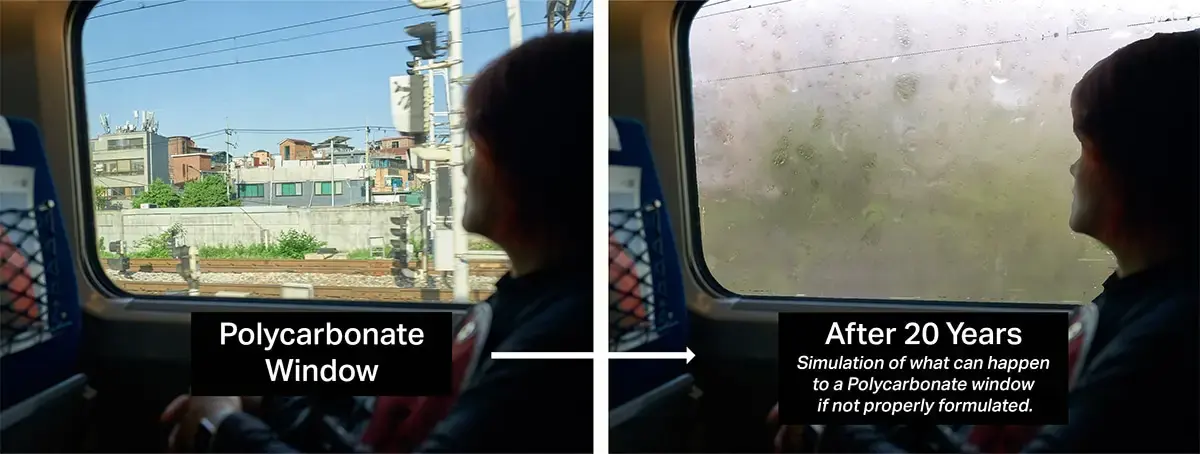
Pictured: Simulated: a polycarbonate window when new, and after 20 years if not properly formulated
In choosing the right material for windows, both glass and polycarbonate have their own unique advantages and disadvantages, making them suitable for different applications. Glass is known for its durability and clarity, while polycarbonate offers superior impact resistance and lightweight properties. Understanding the pros and cons of each can help you make an informed decision for your specific needs.
This white paper explores the key factors in determing the pros and cons of using glass or polycarbonate in outdoor applications that are exposed to weather.
A WHITEPAPER
The following whitepaper is the property of Plastic Expert Group and cannot be copied or distributed without prior permission. Our analysis does not imply that specific plastic failures will happen systematically. Every case is unique and should be treated accordingly.
PROBLEM: Which Window Should I Use, Glass or Plastic?
Transparent materials are widely used in various applications, including windows, skylights in buildings, motorcycle windshields, automotive headlamps, greenhouses, and more. When deciding which type of window is best for a specific application, several material options should be considered: glass, polycarbonate, polyester, and acrylic. Among these, glass and polycarbonate are the most common choices, each with its own set of advantages and disadvantages.
Glass vs. Polycarbonate - Pros & Cons
| Material | Pros | Cons |
|---|---|---|
| Glass | • Inert: Does not degrade or lose clarity when exposed to sunlight or chemicals, offering the longest service life. • Durability: Highly resistant to scratching and abrasion, maintaining transparency. | • Heavy: Significantly heavier than other materials. • Brittle: Not impact-resistant and can shatter upon impact, posing safety risks. • Ultraviolet (UV): Offers some UV protection but additional coatings or films are recommended. |
| Polycarbonate | • Impact Resistance: Highly impact-resistant, and safer for applications requiring durability. • Lightweight: Approximately half the weight of glass sheets of the same thickness. • Versatility: Can be molded into various shapes and sizes. • Optical Clarity: Excellent optical clarity, transmits 88-90% of visible light. | • Service Life: Maximum outdoor service life of 10-20 years before yellowing and loss of clarity and impact strength. • Environmental Sensitivity: Can degrade due to UV exposure, pollution, and aggressive cleaning agents. • Chemical Sensitivity: Not resistant to many chemicals, leading to premature degradation. • Ultraviolet (UV): Requires UV stabilizers to prevent yellowing and embrittlement with extended outdoor use. |
Polycarbonate Exterior / Outdoor Applications
Polycarbonate is a versatile material used in a wide range of applications due to its high impact resistance, optical clarity, and thermal stability. Some common applications include:
- Safety and Security: Polycarbonate is used in bulletproof windows, protective shields, and safety goggles due to its exceptional impact resistance.
- Transportation: It is used in automotive and transportation components such as headlight lenses, sunroofs, and side windows.
- Construction: Polycarbonate is used in greenhouses, roofing materials, and skylights due to its durability and transparency.
- Consumer Goods: Items like eyeglass lenses, protective cases, and sports equipment often utilize polycarbonate for its lightweight and impact-resistant properties.
- Electronics: Polycarbonate is used in electronic components like CDs, DVDs, and insulators due to its high heat resistance.
- Medical Devices: It is used in medical devices such as syringes, IV components, and protective shields.
For exterior applications exposed to weather, polycarbonate is often chosen for its ability to withstand harsh environmental conditions. However, it is important to consider UV stabilization and protective coatings to enhance its weather resistance and prolong its service life.
If polycarbonate is not well-stabilized or does not have a protective coating, the result can be crazing, discoloration, or a cloudy appearance after prolonged exposure to weather conditions. This occurs due to UV radiation, heat, and environmental pollutants breaking down the polymer chains, leading to oxidation and degradation of the material.
IMAGE 1: Simulation of what can happen to polycarbonate window after 20 years if not properly formulated.
Recent Innovations to Enhance Polycarbonate's Weather Resistance
In the past two decades, significant advancements have been made in polycarbonate window technology by companies like Covestro and SABIC. These advancements focus on improving abrasion/scratch resistance and UV resistance, extending the service life and maintaining the clarity of polycarbonate windows.
Some of the key innovations in improving weather resistance of polycarbonate include:
- UV Stabilizers: The addition of UV stabilizers to polycarbonate formulations helps to prevent UV degradation, maintaining clarity and mechanical properties over time.
- Advanced Coatings: The development of advanced protective coatings has further enhanced the weather resistance of polycarbonate, making it more durable in outdoor applications.
- Blending with Other Materials: Innovations in blending polycarbonate with materials like Polybutylene Terephthalate (PBT) or Polyethylene Terephthalate (PET) enhance its chemical resistance
SOLUTION: Remediation of Degraded Polycarbonate Windows
The maximum service life of polycarbonate in exterior applications can vary depending on several factors such as UV exposure, environmental conditions, and maintenance. Generally, polycarbonate sheets can last between 10 to 20 years in outdoor applications.
To determine the root cause for why polycarbonate windows have degraded, it is essential to determine whether the loss of clarity is due to surface scratches or deeper material degradation. If the issue is surface scratches, buffing or filling the scratches may help restore clarity. However, if UV or chemical degradation has occurred, usually replacing the window is the only viable solution. A forensic lab like Plastic Expert Group & Plastic Failure Labs has multiple methods whereby we can determine the root cause of polycarbonate degradation.
Plastic Expert Group consists of consulting and forensic science experts in all fields of plastic technology. When a plastic part prematurely fails, our forensic experts perform laboratory tests and design analysis to determine whether the cause of failure was defective manufacture, defective design, misuse of the product, improper use instruction/failure to warn, or defective installation.
Feel free to share your problem or questions with us and let's discuss!
Related articles
Discuss your matter with a polymer scientist
Our experts provide independent technical opinion on plastic and polymer failures.