
Pipe Failure
Why Do CPVC Pipes Occasionally Fail?
By Dr. Duane Priddy Sr. · Published January 8, 2019
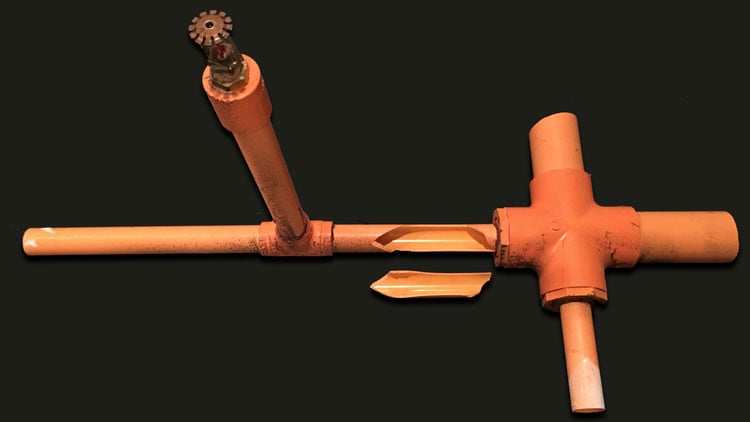
Pictured: CPVC pipe and fittings of the type used in fire sprinkler and potable water systems
2016 Edition
By Dr. Duane Priddy Sr. (Cofounder & CEO), Plastic Failure Labs
Preface
CPVC pipes and fittings have been used successfully for decades. The use of CPVC materials offers significant advantages over metal piping materials including ease of installation and the pipes are not affected by microbial-induced corrosion (MIC). However, as with all plumbing products including metal piping, occasionally a pipe or fitting may fail. When a failure does occur, our experience indicates that often the failure can be linked to improper installation practices and occasionally to defective manufacture of pipes and fittings. There are several ASTM standards (e.g., ASTM D2846 and D2855) teaching exactly how to properly install solvent cemented joints, and yet, many of the CPVC piping systems that we have examined fall significantly short relative to installation requirements.
Many installers appear to believe that it is not important to follow installation rules. We have recently been involved in an investigation of CPVC pipe and fitting failures used in constantly recirculated hot water systems. After about 10 years of continuous exposure to hot chlorinated water, there are recent reports that CPVC pipes and fittings become discolored and brittle – see Plumbers warn of CPVC piping problems at www.clickorlando.com The intent of this article is to provide information to Plumbers and piping system Specifiers to help them in their efforts to provide their customers reliable and efficient piping systems.
Most of the Main Causes of CPVC Pipe Failure Listed Below are Discussed in this Article
- Improper System Engineering/Installation
- Inadequate provision for linear thermal expansion
- Improper use of cement
- Wrong Clamps used or Clamps too tight
- Contact of the outside of the pipe with incompatible material
- Improper Operation
- Exposure to freezing temperatures without freeze protection
- Over-pressurization
- Pulsating water pressure
- Use of incompatible materials around pipes
- Contamination
- Internal
- Use of contaminated antifreeze
- Contaminants from metal water supply piping; e.g., antimicrobial (MIC inhibitor) linings, corrosion inhibitors, phthalate plasticizers from pump seals/gaskets, refrigeration system lubricants
- External
- Incompatible Fire Caulk
- Internal
Plastic failure intelligence, monthly
Forensic case studies, failure-mode explainers, and plastics standards updates from our polymer scientists.
About one email a month. Unsubscribe anytime.
Related articles
Discuss your matter with a polymer scientist
Our experts provide independent technical opinion on plastic and polymer failures.