
Problems We Solve
CPVC Chemical Resistance
CPVC pipe is advertised as chemically resistant. That claim is relative to the chemical.
CPVC performs well against aqueous corrosive acids and bleach. It is not resistant to most hydrocarbon chemicals, and contact with them turns the pipe brittle until it fails. We have analyzed CPVC failures in fire sprinkler, potable water, drain, and industrial service.
Forensic Evidence
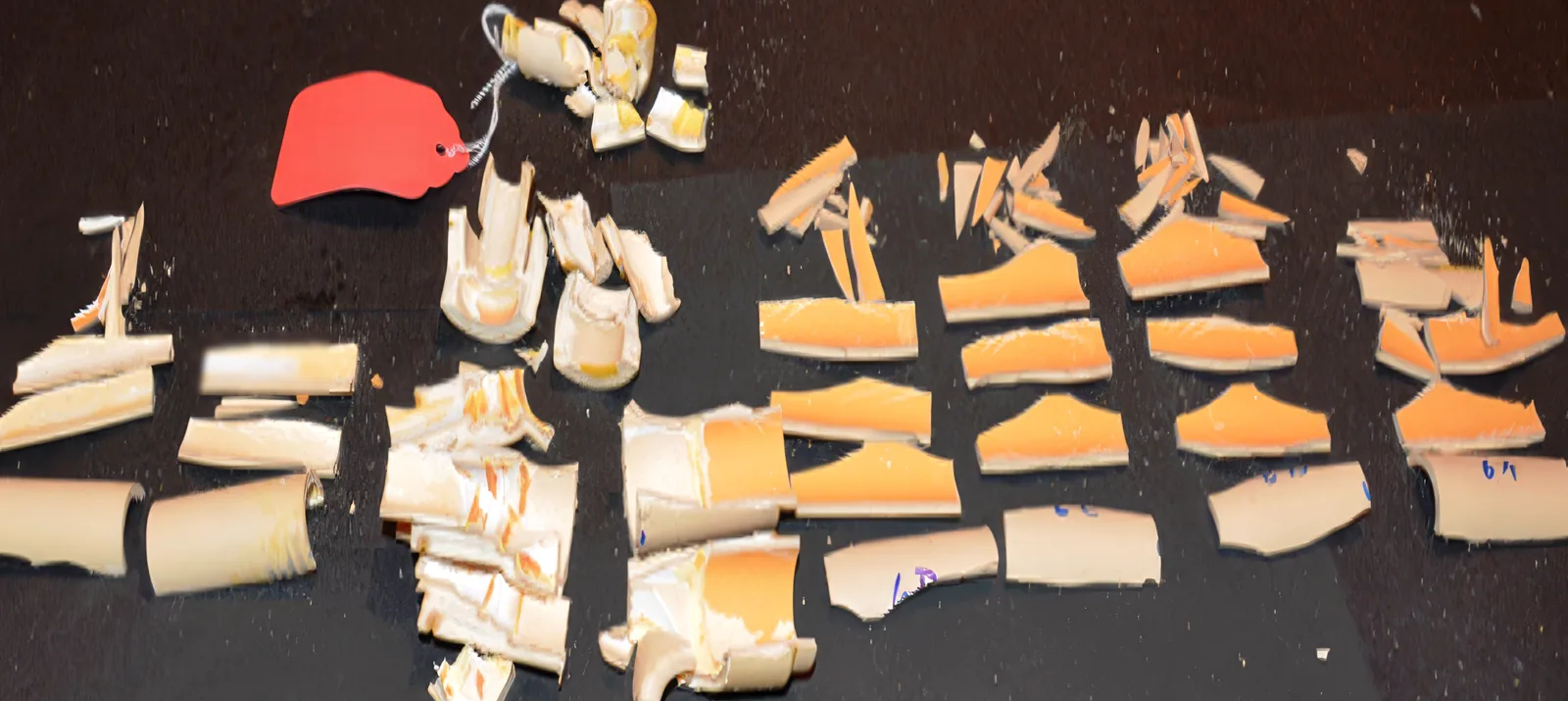
Pictured: CPVC potable water pipe removed from a hotel.
Is CPVC chemically resistant?
Yes and no, and the distinction is the entire engineering question. If a CPVC system carries aqueous solutions of corrosive acids or bleach, CPVC is a good material choice. If the pipe contacts products containing most hydrocarbon chemicals, CPVC is the wrong choice.
Contact of CPVC pipe with products that contain most hydrocarbon chemicals may cause the pipe to eventually turn brittle, then crack and fail under loads it carried without difficulty when it was new. CPVC is marketed as being “chemically resistant” without limiting the types of chemicals it resists. Failures happen because specifiers, installers, and building owners are unaware that CPVC pipes are incompatible with over 90% of all hydrocarbon chemicals.
Compatibility
What CPVC resists, and what attacks it
| CPVC is a good choice for | CPVC is not resistant to |
|---|---|
| Aqueous solutions of corrosive acids | Most hydrocarbon chemicals |
| Aqueous bleach and chlorinated water | Ester plasticizers found in flexible plastics, caulks, and sealants |
| Service where metallic corrosion is the governing concern | Common fire retardants, including those used in spray polyurethane foam |
| Applications where the pipe contacts only water and its normal treatment chemicals | Solvents from the pipe's own solvent cement, when excess cement is left inside a joint |
| Most oils, thread compounds, and moldicides | |
| Impure glycerin antifreeze |
CPVC is a good choice for
- Aqueous solutions of corrosive acids
- Aqueous bleach and chlorinated water
- Service where metallic corrosion is the governing concern
- Applications where the pipe contacts only water and its normal treatment chemicals
CPVC is not resistant to
- Most hydrocarbon chemicals
- Ester plasticizers found in flexible plastics, caulks, and sealants
- Common fire retardants, including those used in spray polyurethane foam
- Solvents from the pipe's own solvent cement, when excess cement is left inside a joint
- Most oils, thread compounds, and moldicides
- Impure glycerin antifreeze
This is a summary for orientation, not a specification. Compatibility depends on concentration, temperature, exposure time, and stress. We test the actual material against the actual chemical.
Mechanism
Hydrocarbon contact does not dissolve the pipe. It embrittles it.
The failure is not corrosion, and early on it is usually not visible from the outside. Susceptible chemicals migrate into the pipe wall and reduce its ductility. A pipe that could absorb movement, water hammer, and installation stress when new becomes brittle and is not able to respond to movement without cracking.
Samples removed from failed systems routinely break into pieces under small hand force in laboratory examination.
Because the same crack can be produced by an installation defect or by a manufacturing defect, identifying chemical attack is a matter of proof, not inference. Our protocol separates the three.
Applications
Five applications, one chemistry problem
CPVC is installed in five broad services. Each one puts the pipe in contact with a different set of chemicals, which is why the same material can perform for decades in one building and fail within months or a few years in another.
Fire sprinkler pipe
Brands include BlazeMaster and FlameGuard
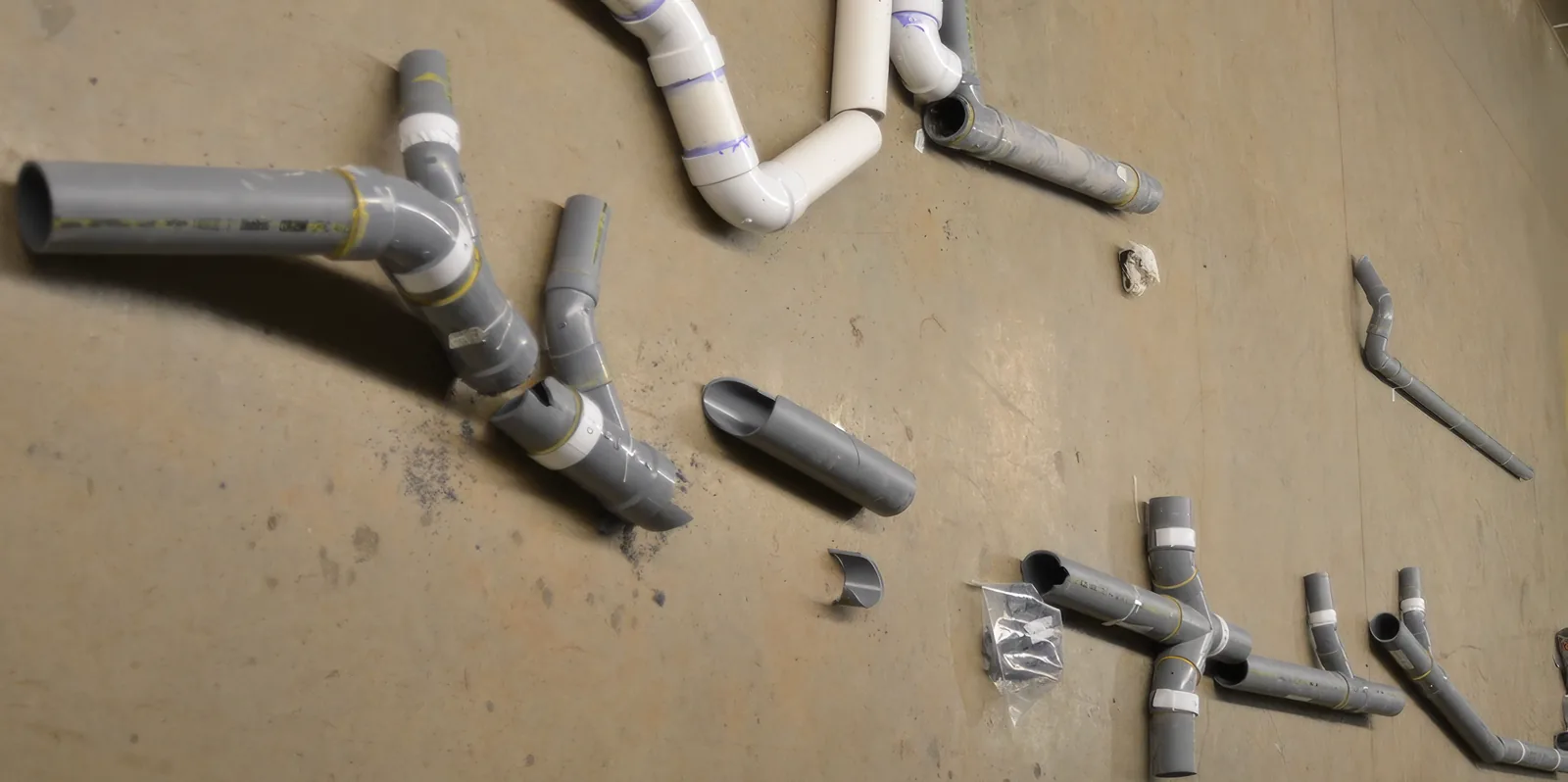
The chemical exposure can be external or internal. Common external exposure to incompatible chemicals can come from spray polyurethane foam (SPF) insulation, acoustical and fire stop caulks, cleaning products, and moldicide sprays. Common internal exposures include contaminated glycerin antifreeze, some pipe thread sealants, and excessive use of solvent cement during installation of the piping joints.
CPVC fire sprinkler pipe failurePotable water pipe
Brands include FlowGuard Gold and EverTuff
We have examined potable water CPVC removed from hotels and multifamily buildings that had turned brittle throughout the building rather than at a single joint. Building-wide embrittlement changes the scope of a claim from a repair to a repipe.
Laboratory Sink Drain Pipe
Brands include ChemDrain
Drain lines receive whatever is poured into them. In laboratory and healthcare settings that routinely includes hydrocarbon solvents, and failures can appear within months of installation rather than years.
Residential Drain Pipe
Brands include EverTuff and FlowGuard Gold
CPVC drain pipes can fail from exposure to someone dumping pure acetone, a bottle of nail polish remover, or hand lotion into the sink. CPVC pipes also fail when used as condensate drain lines on HVAC systems.
Industrial and data center pipe
Brands include Corzan
Process and cooling systems carry fluids, inhibitors, and additives the piping was never qualified against. The chemistry the system actually sees is often not the chemistry it was specified for.
Data center piping failureBrand names are listed because they identify the product families involved in published litigation and industry reporting, not as advocacy against any manufacturer.
Evidence
What chemical attack looks like
FAQ
Common Questions About CPVC Chemical Resistance
Related Use Cases
Related Pipe and Polymer Failure Investigations
CPVC Fire Sprinkler Pipe Failure
Four failure tracks separated to the right defendant: external chemical, internal chemical, installation, and manufacturing.
Read moreCPVC Environmental Stress Cracking
The failure science: how ESC happens, how we prove it, and how to prevent it.
Read morePipe Failure Analysis
Our broader pipe-failure practice across litigation, subrogation, and HOA matters.
Read moreData Center Piping
CPVC and PVC failures behind mission-critical data-center water-loss events.
Read moreWater-Loss and Subrogation
Forensic root-cause support for carriers, adjusters, and subrogation counsel.
Read moreForensic Testing and Analysis
A2LA-accredited affiliate testing built to survive a Daubert challenge.
Read moreExpert Review
Tell Us About Your CPVC Failure
Share the building, what failed, and what you have. We will respond within one business day with next steps and whether a non-destructive inspection or sample review makes sense first.
Fast Initial Review
No-cost initial assessment for attorneys, insurers, manufacturers, and property owners.
Accredited Independent Testing
Testing through an independent, A2LA-accredited affiliate-lab network.
Prefer to Call?
+1 (989) 281-4465