Product Design · FEA · Mold Flow · Material Selection · Process Optimization
From Concept to Production-Ready Plastic Parts
Selecting the right material, designing for moldability, and optimizing for cost, before the molds are cut. Our deep polymer expertise eliminates the most common road blocks between a brilliant concept and a profitable product.
In the Lab
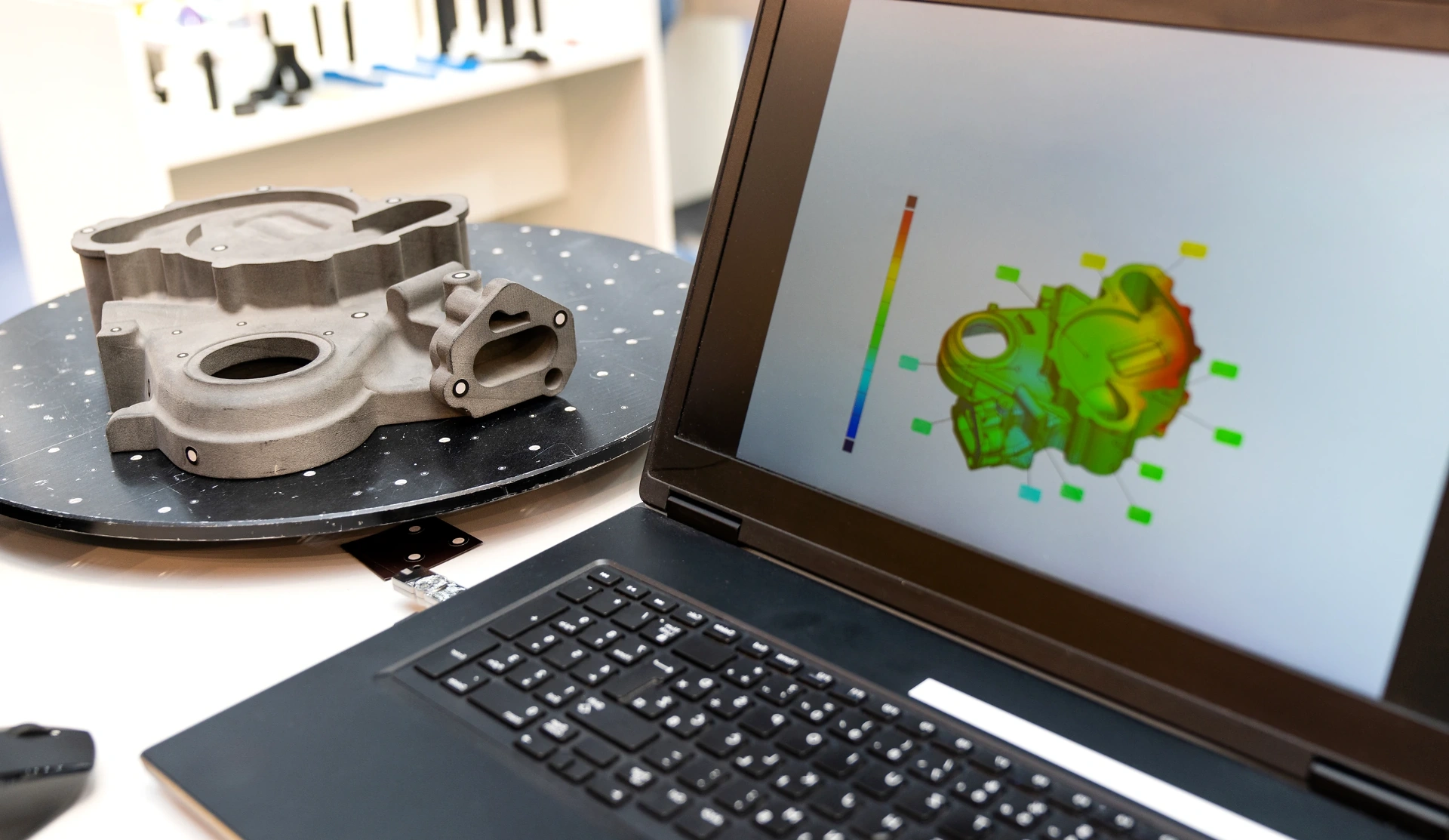
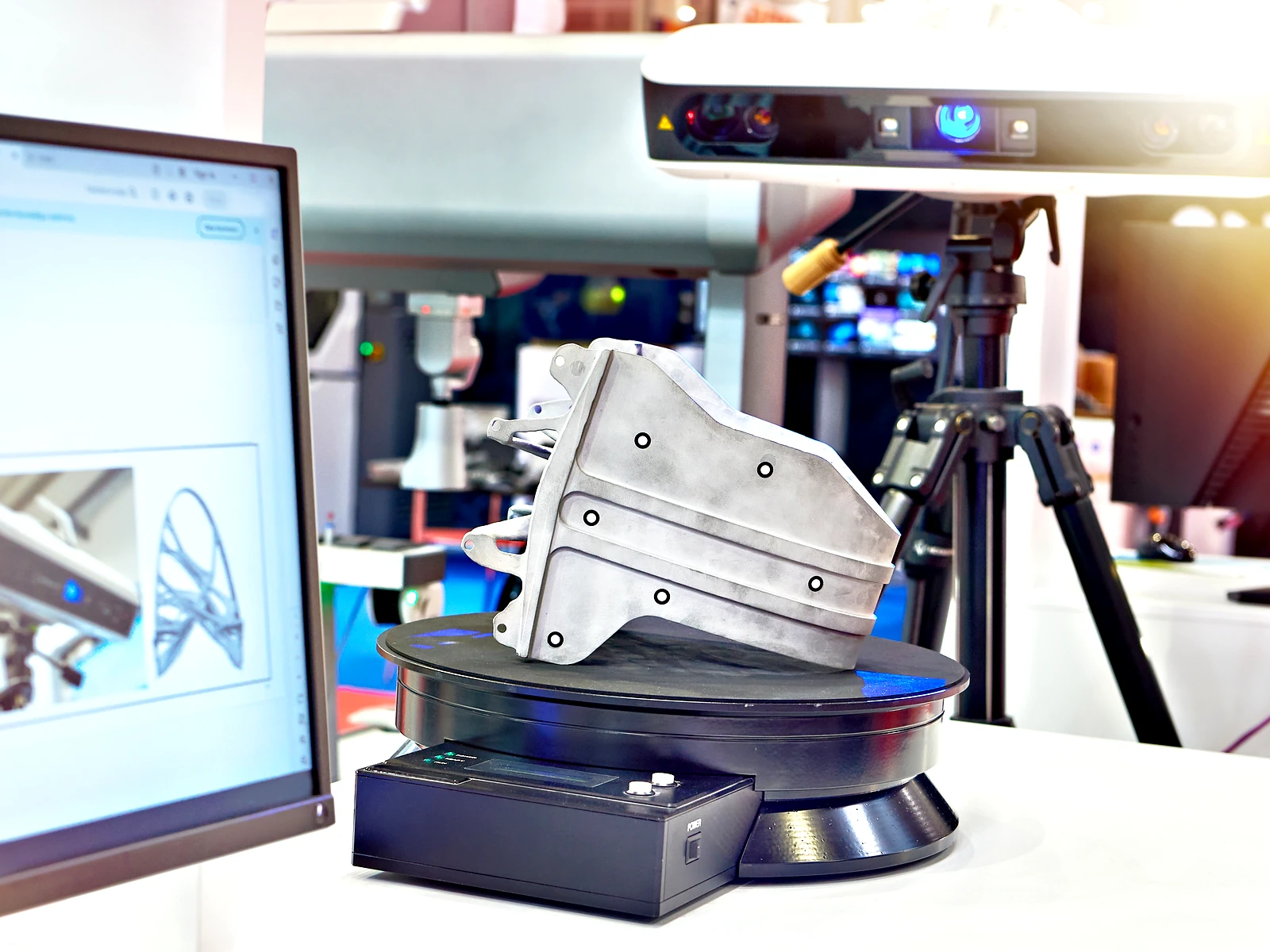
Pictured: 3D scanning and FEA analysis
Client Matters
Litigation-Related Projects
Experts
US States Served
Why Specialized Plastic Consulting Matters
Most design firms are generalists. Here's why the science of plastics demands specialists.
Litigation-Informed Design
Understanding why plastic parts fail is key to designing, developing, and manufacturing reliable products. Our failure analysis background gives us an advantage in preventing the exact failure modes we've seen in courtrooms.
Polymer Science, Not Just Form
Our plastic experts understand the chemistry and engineering of plastics at the molecular level. We don't just design shapes. We engineer materials, crystallinity, and additive packages for real-world performance.
Decades of Manufacturing Experience
Our team has decades of hands-on experience in the Plastics Industry. We've successfully helped many clients bring their ideas to market rapidly and cost-effectively.
Early Retention Saves Millions
Experienced plastic experts have seen it all and know the pitfalls. Early retention of a highly experienced plastic engineer speeds up the development process and reduces cost. We have redesigned extrusion dies to eliminate scrap and rework on a client's line. Engage us early and we become an extension of your in-house team, catching failure modes on the drawing board instead of in the field.
Engineering & Design Services
Five core capabilities, from simulation to production-floor optimization.
Finite Element Analysis & Dynamic Simulation
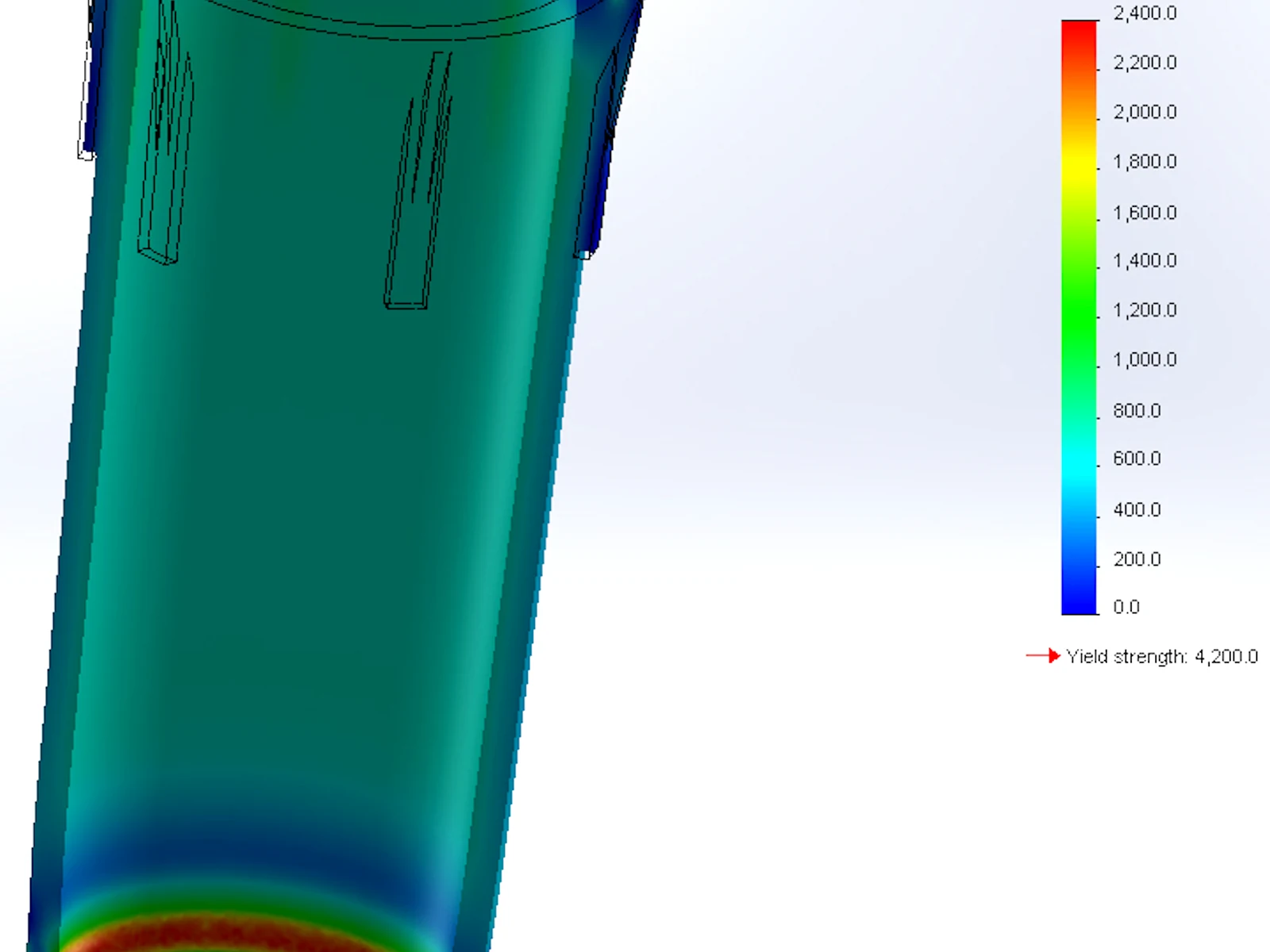
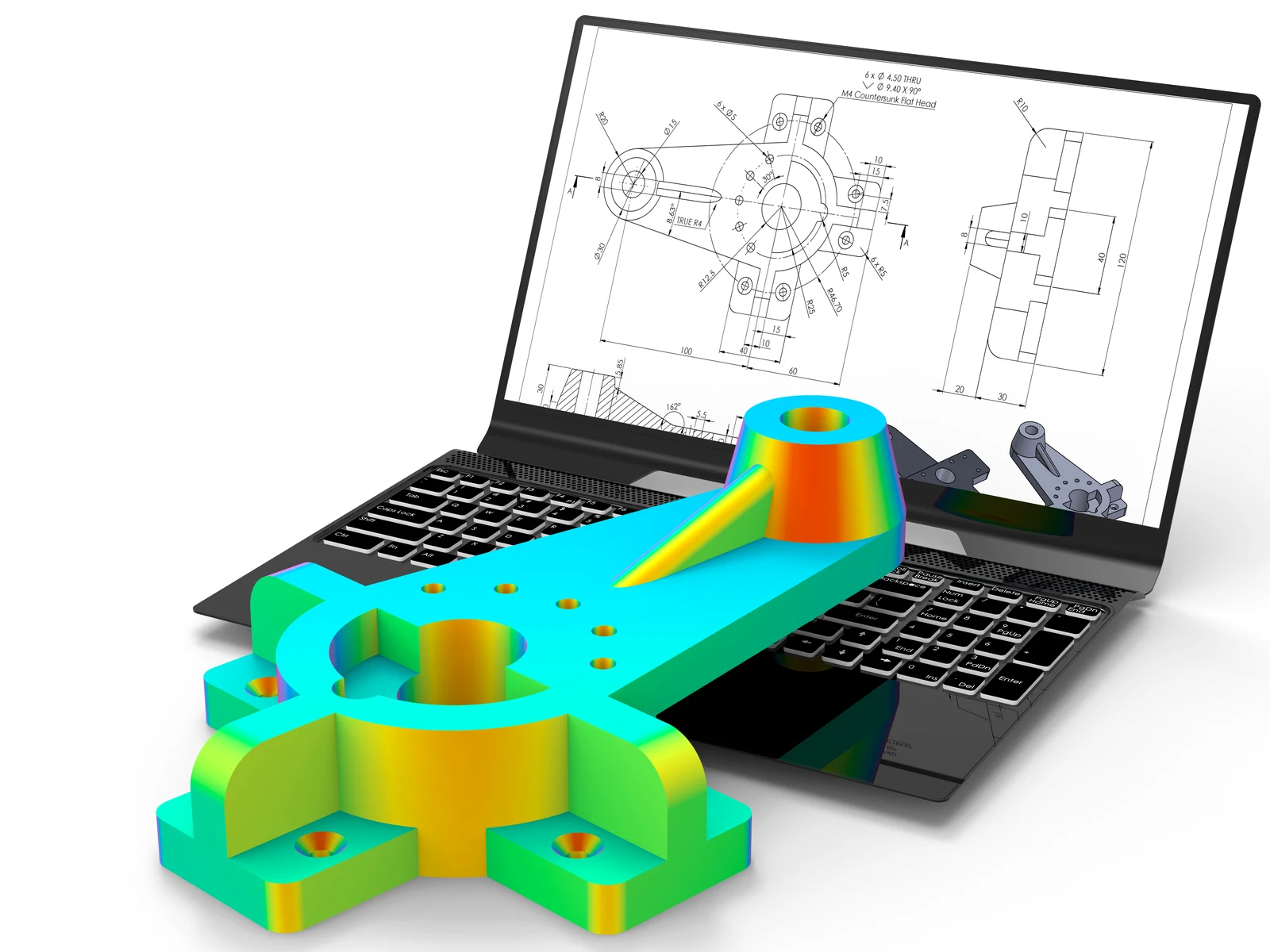
When designing parts, directional changes must be carefully radiused to spread stresses evenly. Our mold fill & pack analysis optimizes gate location and sizing. Our experienced experts can spot potential design flaws that computer models occasionally get wrong. Our dynamic FEA equipment, powered by high-speed supercomputers, predicts fatigue performance and service life.
- Static and dynamic FEA stress analysis
- Fatigue life prediction via supercomputer simulation
- Mold fill & pack analysis with gate optimization
- Identification of stress concentrations at radii and transitions
- Cyclic fatigue testing correlation with simulation results
Material Selection & Chemical Compatibility
The most common cause of plastic product failure is Environmental Stress Cracking (ESC). Material datasheets list strength, thermal, and flow properties but often lack chemical resistance details. We routinely conduct ASTM D543 'Resistance of a Plastic to a Chemical' tests to confirm products won't fail from chemical exposure. There are literally thousands of materials available. Choosing the right one requires polymer science expertise.
- ASTM D543 chemical resistance testing
- ESC risk assessment for amorphous plastics
- Carbon fiber & glass fiber reinforcement optimization
- Cost-performance material trade-off analysis
- Regulatory-compliant material selection (FDA, UL, ASTM)
Mold Flow Analysis & Mold Design
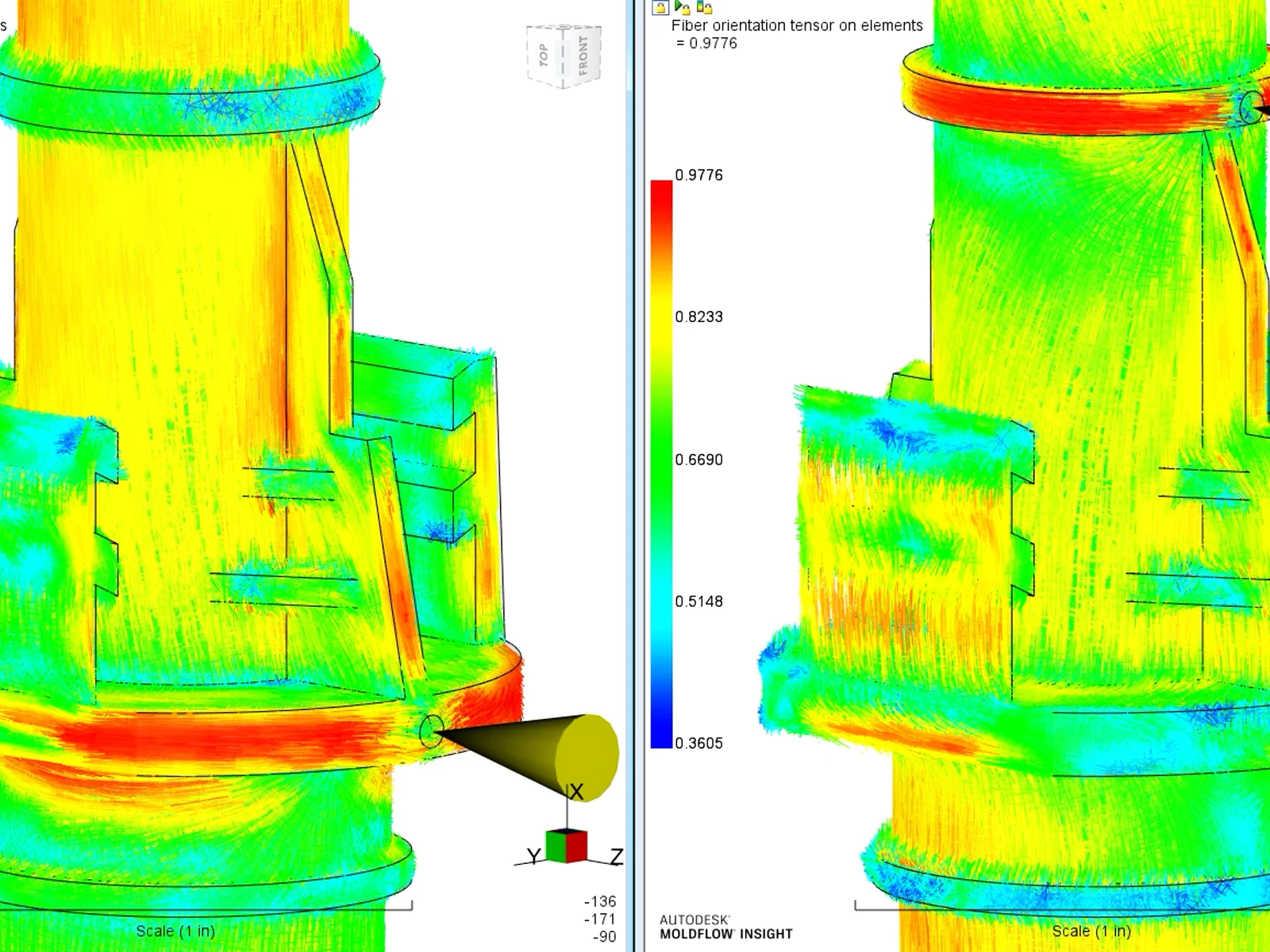
An example: a plastic toilet flush valve molded from glass-fiber reinforced polypropylene failed in service. SEM images revealed glass fibers oriented parallel to the fracture, weakening rather than reinforcing the material. Our expert predicted improper gate location caused the fiber orientation issue. Mold flow analysis confirmed this: moving the gate would have allowed fibers to orient randomly, strengthening the part.
- Gate location and sizing optimization
- Glass fiber orientation prediction and correction
- Weld line and knit line identification
- Fill pattern and pack pressure optimization
- Certified Autodesk Moldflow & Solidworks analysis
Reverse Engineering & Deformulation
Reverse engineering of a plastic product goes beyond 3D scanning. It includes deformulation (identifying the plastic and all additives in the material) and CT scanning to generate a 3D computer model of the part design. This molecular-level analysis reveals exactly what a competitor is using and how their part is constructed.
- CT scanning for 3D part geometry capture
- Plastic deformulation (base resin + additives identification)
- FTIR & GC-MS chemical fingerprinting
- Competitor material and design benchmarking
- Intellectual property investigation support
Manufacturing Process Consulting & Scientific Molding
Molding a part involves optimization of the molding process through 'Scientific Molding.' We are experts in implementing this process to improve part quality. Production processes are often not optimized and can easily be adjusted to increase production rate without affecting part performance, reducing cost through both higher throughput and appropriate material selection.
- Scientific Molding implementation and training
- Process parameter optimization for quality and speed
- Residual stress measurement and reduction
- Cost reduction through material and cycle time optimization
- Quality control system development for shop floor testing
Failure Modes That Require Better Design
Learning from how plastics fail to design products that don't.
Advanced Capabilities
State-of-the-art tools and proprietary methods set us apart from general design firms.
Quality Control System Development
Residual stress in plastic parts is often a key factor causing failure. The fabrication process should be carefully optimized to minimize residual stresses. We develop simple, effective tests for accepting or rejecting parts (like oven-based dimensional change measurements) to detect residual stress before parts leave the factory.
Cost Reduction Consulting
Cost is directly related to resin cost and production rate. Some products are over-engineered with expensive plastics when a lower-cost alternative works equally well.
Dynamic FEA & Supercomputing
Our dynamic computer simulation expert uses high-speed supercomputers to predict the fatigue performance and service life of plastic parts. Very few design firms have this capability.
Our 5-Step Consulting Process
A proven methodology that keeps development projects on track toward reliable, cost-effective production.
Understand the Problem
Deep-dive into the client's challenge, whether it's a new product concept, a failing existing product, or a cost reduction initiative.
Examine & Analyze
Deploy FEA, mold flow analysis, material testing, and forensic techniques to build a complete picture, and run a Failure Mode and Effects Analysis (FMEA) to rank the risks that matter most.
Develop Solutions
Engineer the optimal combination of material, design, and process, applying Design for Manufacturing and Assembly (DFMA) so parts are easier to make and less likely to fail.
Implement
Advise on how best to implement solutions, from prototype testing to production ramp-up.
Monitor & Maintain
Develop ways to monitor and maintain the solutions. Establish quality control systems and residual stress testing protocols.
Technical Deep Dives
Key polymer science concepts every product developer and engineer should understand.
Representative Engagements
Real-world consulting engagements that demonstrate our impact.
Plastic Storage Bag Die Design
Used dynamic die modeling technology powered by high-speed supercomputers to design extrusion dies for different size bags. The dies performed to specification.
Toilet Flush Valve Failure Analysis
Glass-fiber reinforced PP flush valve failed in service. SEM revealed fiber orientation parallel to fracture. Mold flow analysis confirmed improper gate location caused the fiber alignment issue, proving a design/mold defect.
Residual Stress Reduction Program
Developed quality control protocols for detecting residual stress using oven-based dimensional change measurements. Optimized fabrication processes to minimize stress, reducing field failure rates.
FAQ for Product Developers
Common questions from manufacturers and R&D teams considering plastic consulting.
Accreditations & Affiliations
Independent accredited labs across North America, Europe, Asia-Pacific, Australia, and the Middle East

Start Your Project
Whether you're developing a new product, optimizing an existing design, or investigating a field failure, our team of polymer scientists and engineers is ready to help.