
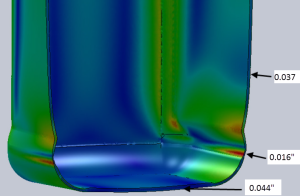
Before using a bottle to contain a chemical solution, chemical compatibility testing should be performed to ensure that the chemicals are compatible with the bottle material. As an example, we recently were asked to determine why a blow-molded PVC bottle ruptured allowing gelled ethanol to spray onto a child. Ethanol is only marginally compatible with PVC. Residual stresses in the material from the blow molding process in combination with a large wall thickness variation in the bottle wall led to the bottle failure. Finite element analysis predicted the location of the failure.
Plastic failure intelligence, monthly
Forensic case studies, failure-mode explainers, and plastics standards updates from our polymer scientists.
About one email a month. Unsubscribe anytime.
Related articles

Discuss your matter with a polymer scientist
Our experts provide independent technical opinion on plastic and polymer failures.